English
 Deutsch
 Español
 Français
 Italiano
 Nederlands
 العربية
 中文
 Dansk
 Svenska
 Norsk
 Suomi
 日本語
 Polski
 Português

News
Future Day 2026: young visitors discover paediatric rehabilitation
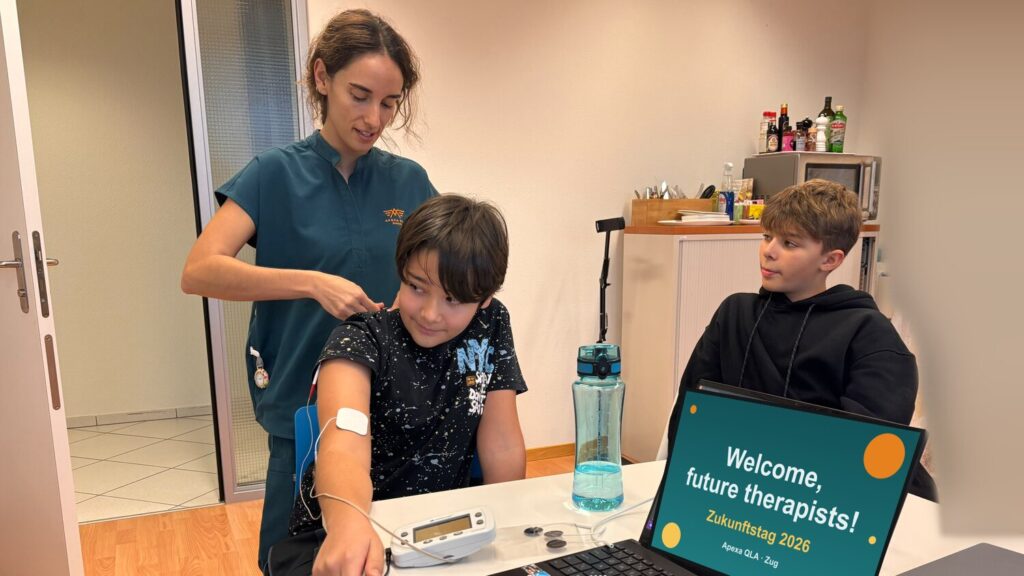
For Switzerland's Nationaler Zukunftstag, school pupils spent a day in our Zug centre. They watched therapy sessions, met our methods up close and felt electrical stimulation on their own arm.
A different kind of school day
On Thursday, 12 November 2026, our centre in Zug was a little livelier than usual. For the Nationaler Zukunftstag, Switzerland’s national Future Day, a group of school pupils swapped their classroom for our therapy rooms and spent the day with our team.
We will say it right away: they were amazing.
The concept: switching sides
The Zukunftstag has a simple and clever idea at its heart. Pupils from the 5th to the 7th school year step into a working world they might never have picked on their own. Its motto is Seitenwechsel, switching sides: rather than confirming a dream job, you look at a career you would not have thought of, and you see it from the inside.
Paediatric rehabilitation is a perfect fit. Most young people have never seen what happens in a therapy room for children with complex needs, and you only really understand it once you are there. So we did not give a talk. We opened our doors and let them be part of the day.
What they saw
Our visitors watched real therapy sessions, with the kind permission of the families. They saw how a therapist reads a child’s movement, adjusts an exercise within seconds, and turns hard work into play, so that a child wants to try just one more time.
They also saw the parts nobody sees from the outside: how we film and review movements to plan the next step, and how closely we work with the parents, who are part of the team in every session.
The methods, up close
What our visitors discovered
- The ORCA Method: our concept, created by Fabienne Theler, MSc PT. It is how we reason through each child's goals and choose the right tools for them.
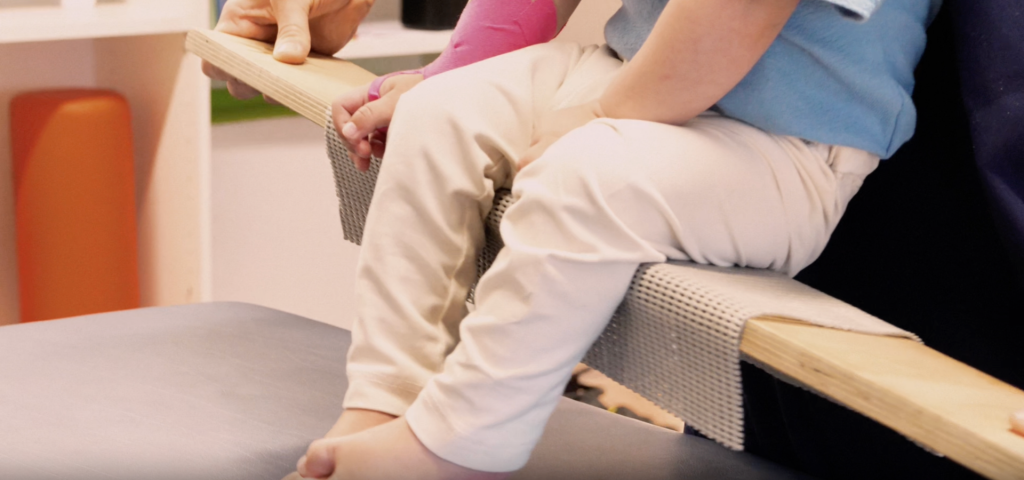
- DMI (Dynamic Movement Intervention): an incredible tool and a fundamental part of ORCA. Small, precise movement challenges build balance, strength and control.
- Electrical stimulation (NISE-Stim and TASES): gentle impulses that help muscles switch on, paired with active movement.
- TheraTogs: how a well-fitted garment supports posture and alignment. We are the TheraTogs experts, certified fitters trained by the inventor, Beverly Cusick.
- Measuring progress: why we test with tools like the GMFM, so that every step forward can be seen, not just felt.
Hands on: electrical stimulation
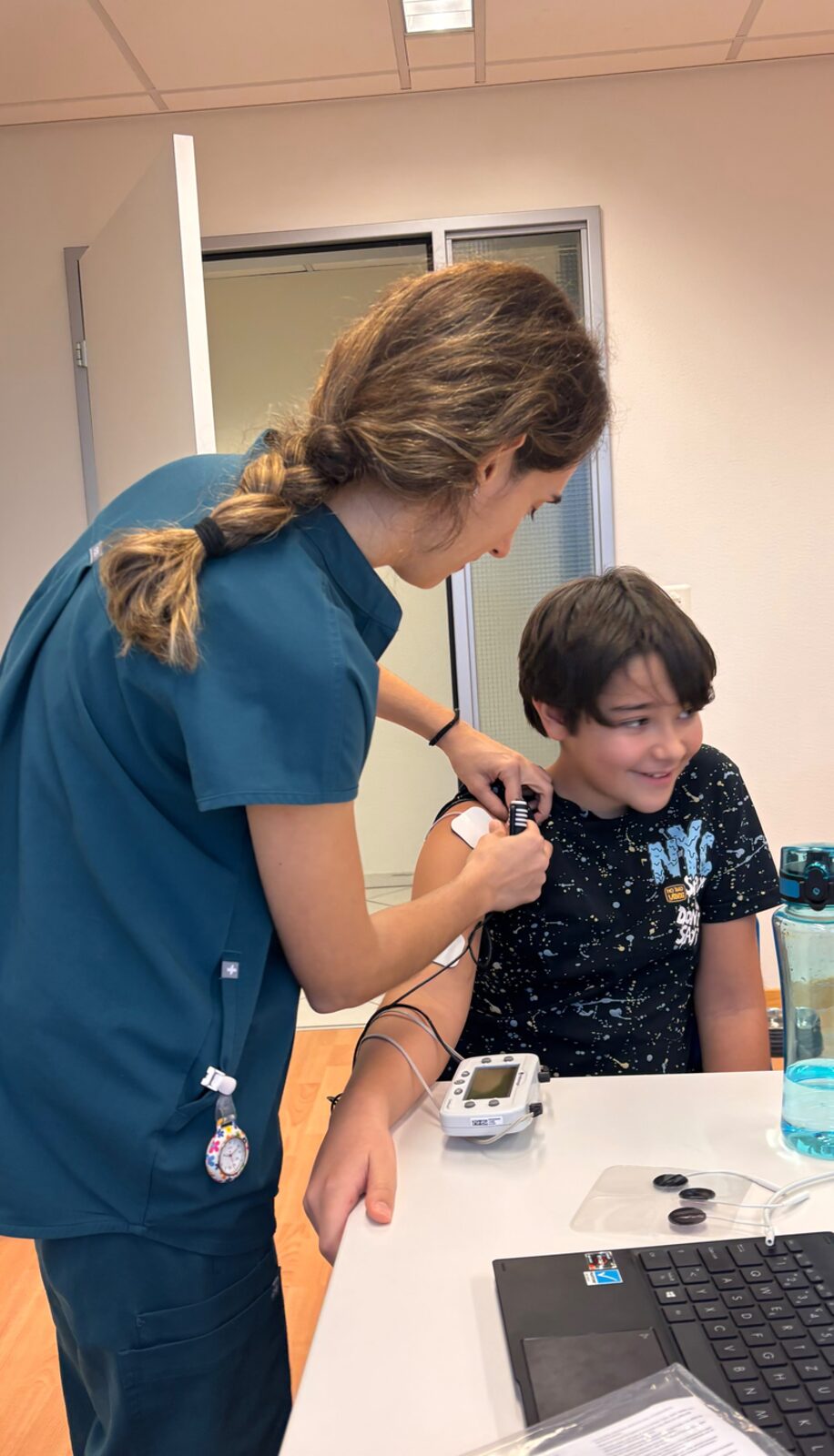
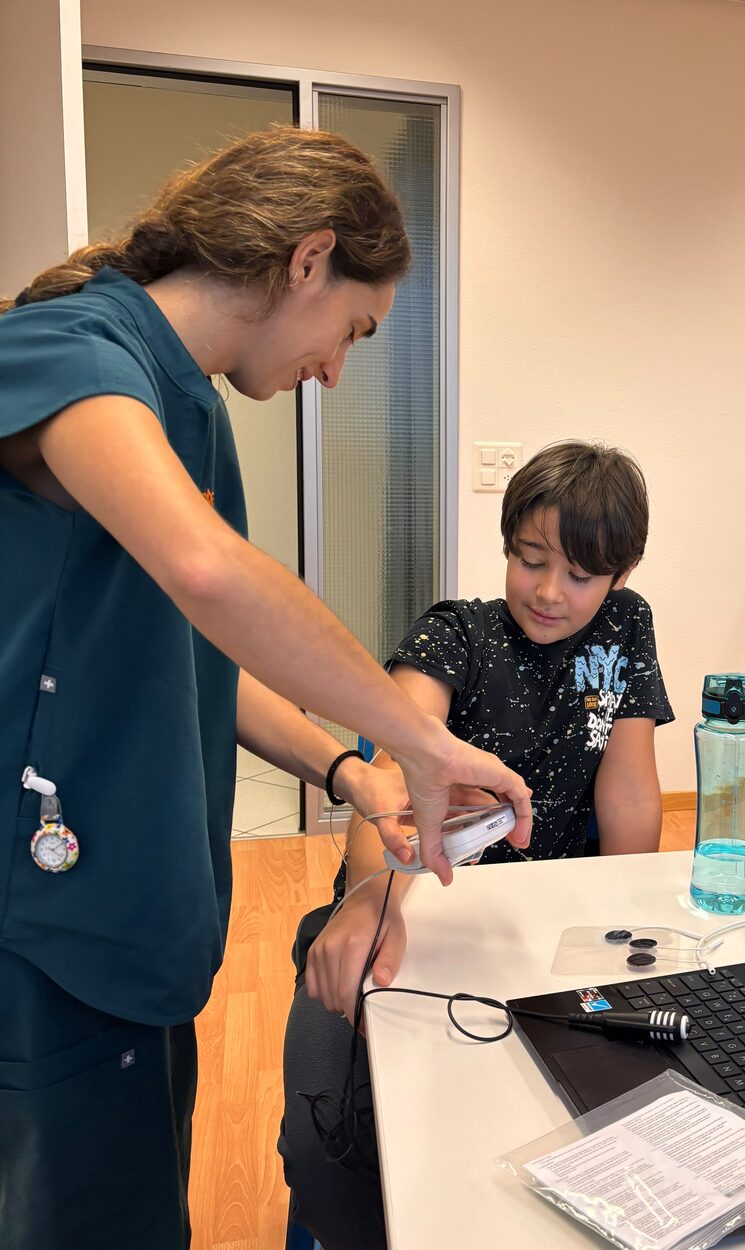
The highlight for many was trying it themselves. Our therapist placed electrodes on a volunteer’s upper arm and slowly turned up the impulses until the muscle twitched on its own. There was laughter, a little surprise, and immediately the right question: how does this help a child who cannot move that muscle well?
That question led straight into what we do every day. With TASES, the stimulation is paired with an active movement, so the brain and the muscle practise together. With NISE-Stim, gentle impulses support the nervous system, and parents learn to continue it at home.
Amazing participation
What impressed our team most was how fully our visitors joined in. They asked sharp, curious and refreshingly direct questions, volunteered to try things themselves and watched the sessions with real respect for the children and families. Questions like theirs make you explain your own work better, and more than one of us went home thinking about them.
And because a day like this deserves a proper celebration, there was McDonald’s for the entire centre at lunchtime. Burgers, fries and plenty of laughter around one big table, with the whole team and our young guests together.
Why it matters to us
Children with complex needs deserve a new generation of therapists, engineers, doctors and carers who know this field exists, and how much it gives back. In Switzerland, physiotherapy is a bachelor’s degree at a university of applied sciences, and many different paths lead into paediatric care. If one of our visitors remembers this day when choosing a career, it was worth every minute.
A big thank you to our young guests, to their parents and schools, and above all to the families who let them watch and shared a little of their journey.
Thinking about next year? The next Zukunftstag is on Thursday, 11 November 2027. Pupils and parents who would like to visit us can get in touch.
Sources
- Nationaler Zukunftstag: Seitenwechsel für Mädchen und Jungs. nationalerzukunftstag.ch
- Russell, D. J., Rosenbaum, P. L., Cadman, D. T., Gowland, C., Hardy, S., & Jarvis, S. (1989). The Gross Motor Function Measure: a means to evaluate the effects of physical therapy. Developmental Medicine & Child Neurology, 31(3), 341–352. doi.org/10.1111/j.1469-8749.1989.tb04003.x