English
 Deutsch
 Español
 Français
 Italiano
 Nederlands
 العربية
 中文 (中国)
 Dansk
 Svenska
 Norsk
 Suomi
 日本語
 Polski


Parent guides
Inclusion at school for children with disabilities: a practical guide for parents and teachers
What inclusive education really means, what your child is entitled to, and the practical things — seating, communication, movement, breaks and friendships — that make inclusion work in a real classroom. With insights from our work with children with complex needs.
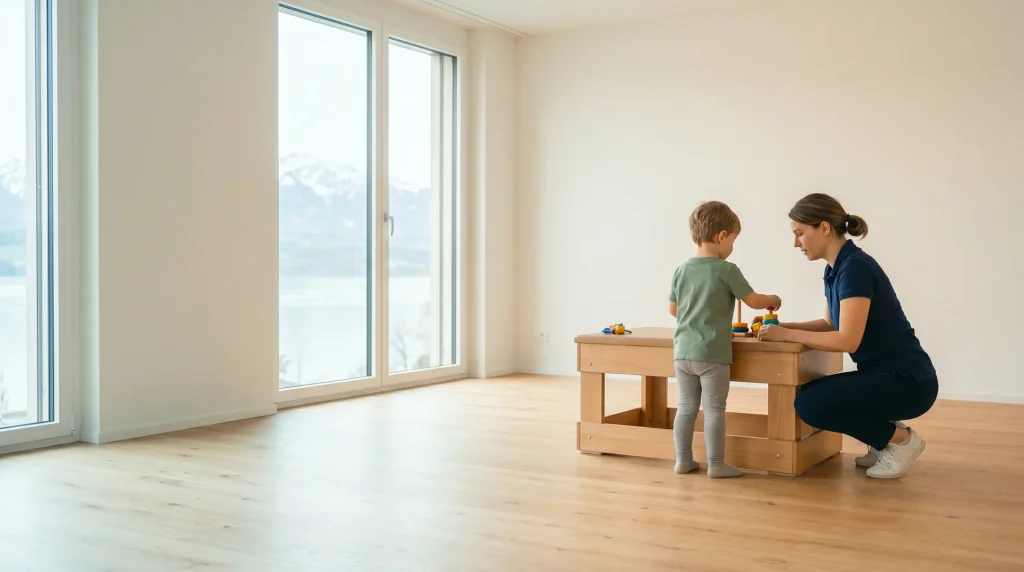
For many parents, the first school day is one of the biggest steps of all. If your child has cerebral palsy, a genetic syndrome, spina bifida or another condition that affects movement or communication, the questions multiply: Will my child be able to join in? Will the teacher understand them? Will they make friends? This guide explains what inclusion at school means and what helps it succeed, plainly and practically.
What is inclusive education?
Inclusive education means that children with disabilities learn together with their peers in mainstream schools, with the support they need to take part fully — not just to be present in the room. It is different from integration, where a child is placed in a mainstream class but expected to adapt, and from separate special schooling.
The idea has strong international backing. The UNESCO Salamanca Statement (1994) called on countries to make inclusive schools the norm, and Article 24 of the UN Convention on the Rights of Persons with Disabilities (CRPD) recognises the right of children with disabilities to an inclusive education. Switzerland ratified the CRPD in 2014, as have all EU member states.
Inclusion in Switzerland
In Switzerland, schooling is the responsibility of the cantons, and since 2008 special needs education has been a cantonal task too. The federal Disability Discrimination Act (BehiG) asks cantons to encourage the integration of children with disabilities into mainstream schools, through suitable forms of schooling, where this is possible and good for the child. In practice, a large share of children with special educational needs in Switzerland are now taught in regular schools, but the details — assistants, therapy at school, special classes — differ from canton to canton. Your school psychology service or cantonal special needs office is the place to ask.
Across Europe and the Balkans the picture is similar: the right to inclusive education is recognised, but how well it works depends a great deal on local resources and on the people involved.
Why inclusion matters
- Belonging and friendship — children learn from and with each other; being part of a class is a powerful motivator.
- High expectations — children often rise to what is expected of them. Low expectations are one of the biggest barriers a child with a disability faces.
- Participation in everyday life — school is where children practise skills for life: communicating, moving around, managing time, solving problems.
- Benefits for classmates — children who grow up alongside peers with disabilities learn patience, empathy and that people communicate and move in many different ways.
Inclusion is not always easy, and it is not one-size-fits-all. For some children with very complex needs, a specialised setting — or a mix of both — is the better choice at certain times. What matters is that the decision is made around your child, not around a system.
What makes inclusion work in practice
1. Seating and positioning
A child who has to fight to stay upright has little energy left for learning. Good seating — the right chair height, foot support, a stable pelvis and sometimes a special seating system or standing frame — makes writing, using a device and paying attention much easier. A therapist can advise the school on what a child needs.
2. Communication
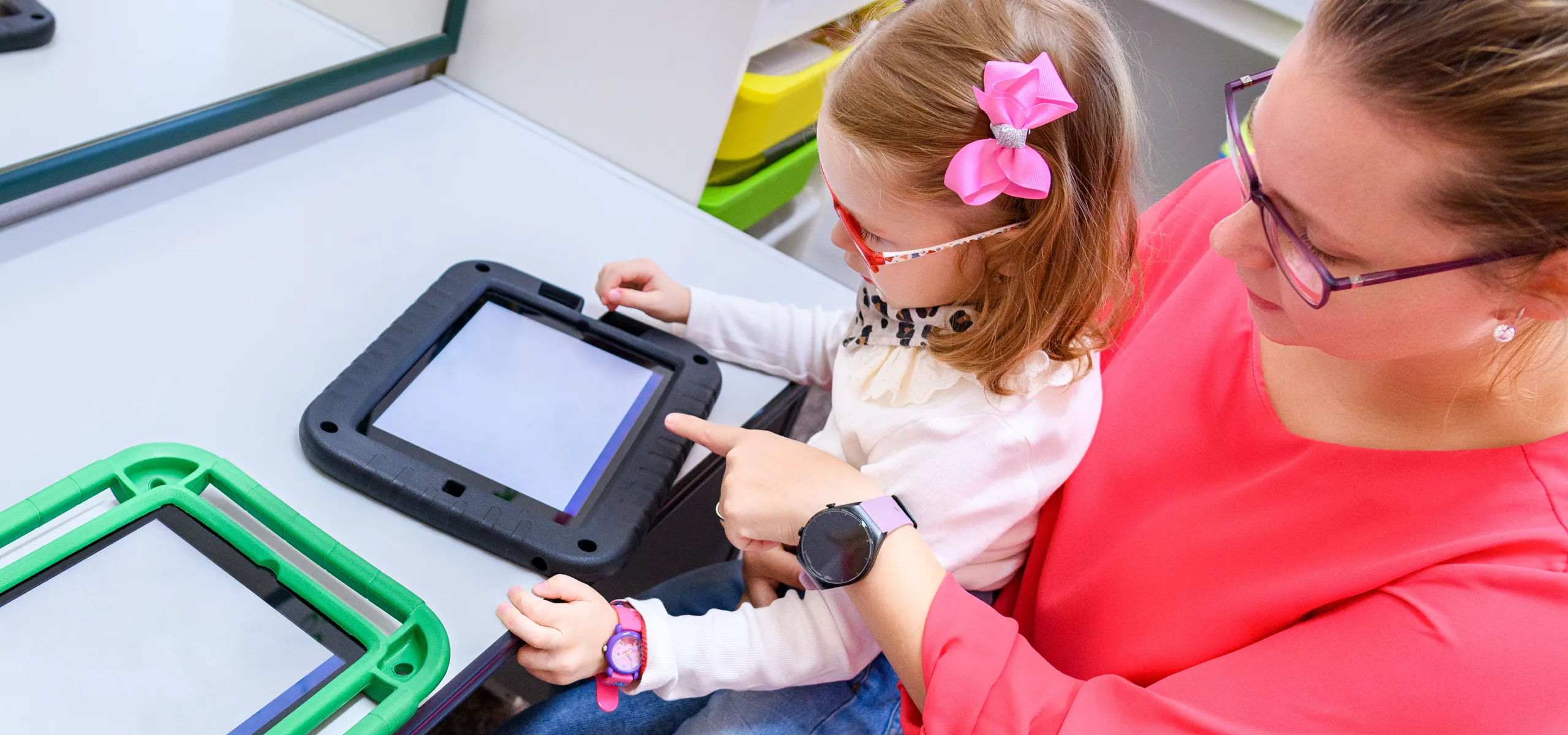
Children who cannot speak clearly may use signs, picture symbols or an AAC device (augmentative and alternative communication), such as a speech-generating tablet or eye-gaze system. Inclusion works when the whole class learns how to talk with the child: wait for answers, ask questions the child can answer, and make sure the device is always within reach and charged. Our review of the film Out of My Mind shows beautifully why this matters.
3. Moving around safely
Step-free access, enough space for a wheelchair or walker between desks, safe transfers and a plan for breaks and the playground all make a big difference. So does planning for physical education: almost every PE lesson can be adapted so that a child can take part in a meaningful way.
4. Energy and fatigue
Many children with neurological conditions tire more quickly, because moving and concentrating take more effort. Short movement breaks, a quiet corner, and spreading demanding tasks across the day help a child stay at their best.
5. Hand function and learning tools
Adapted pens and grips, sloped boards, a laptop or tablet instead of handwriting, extra time and digital worksheets let a child show what they know without being held back by their hands.
6. Personal care and medical needs
Toileting, eating, medication, a shunt or seizure plan, or catheterisation all need clear, written arrangements, trained staff and respect for the child’s dignity and privacy.
7. Friendships and attitudes
Inclusion is social as much as practical. Explaining a child’s condition to classmates — with the child’s and family’s agreement — and giving children chances to work and play together builds real friendships. Teachers set the tone: when they treat a child as a capable member of the class, classmates follow.
The team around your child
Inclusion succeeds when everyone works towards the same goals. That team usually includes you, your child, the class teacher, a special needs teacher or classroom assistant, and therapists — physiotherapy, occupational therapy and speech and language therapy — plus your doctors.
- Share what works. A short, practical handover — how my child sits best, how they communicate, what helps when they are tired — is worth more than a long medical report.
- Set shared goals. Goals such as “takes part in group work using the talker” or “moves between classroom and playground independently” connect therapy to school life.
- Review regularly. Children grow and needs change. A check-in each term keeps support up to date.
How we support inclusion at Apexa QLA Suisse
We are a specialist paediatric rehabilitation centre in Zug for children with complex neuro-motor conditions, and complex cases are our focus. School and participation are part of every plan we make.
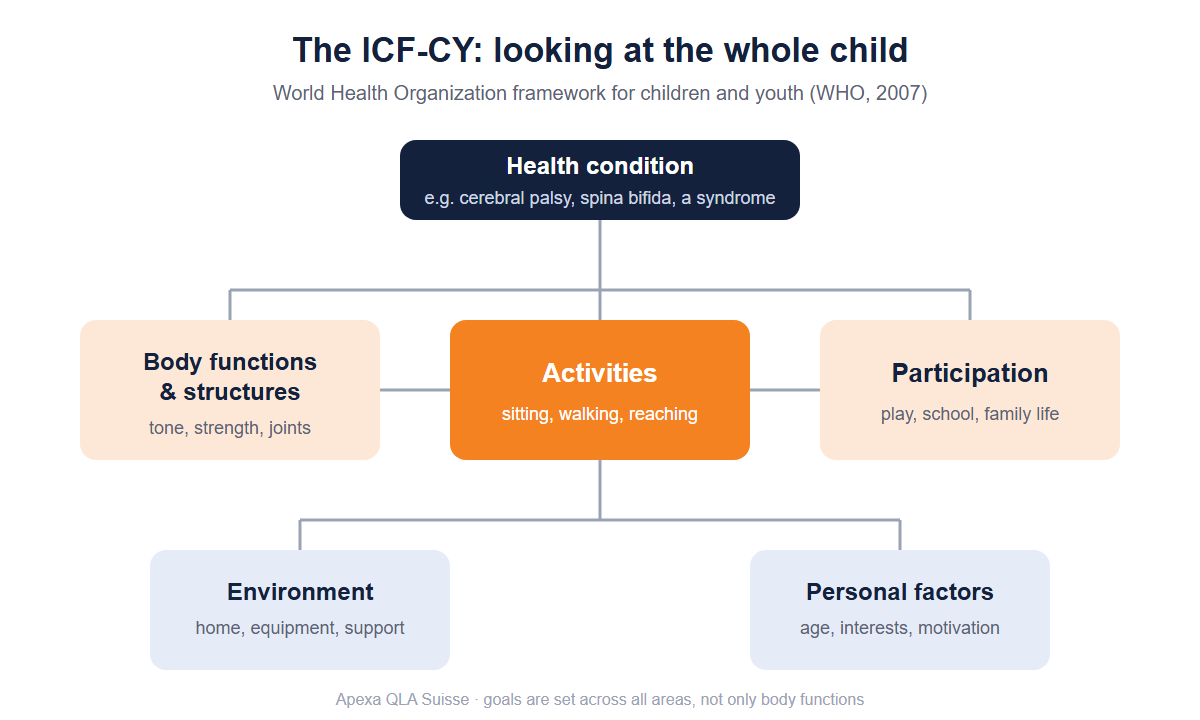
- Goals that matter at school. We plan with the ICF-CY, the World Health Organization’s framework for children and youth, so therapy goals include participation in class, play and friendships — not only muscle strength or range of movement.
- Measured progress you can share. We measure with the GMFM and Peabody-3 and give you a clear ORCA report that teachers and school services can use.
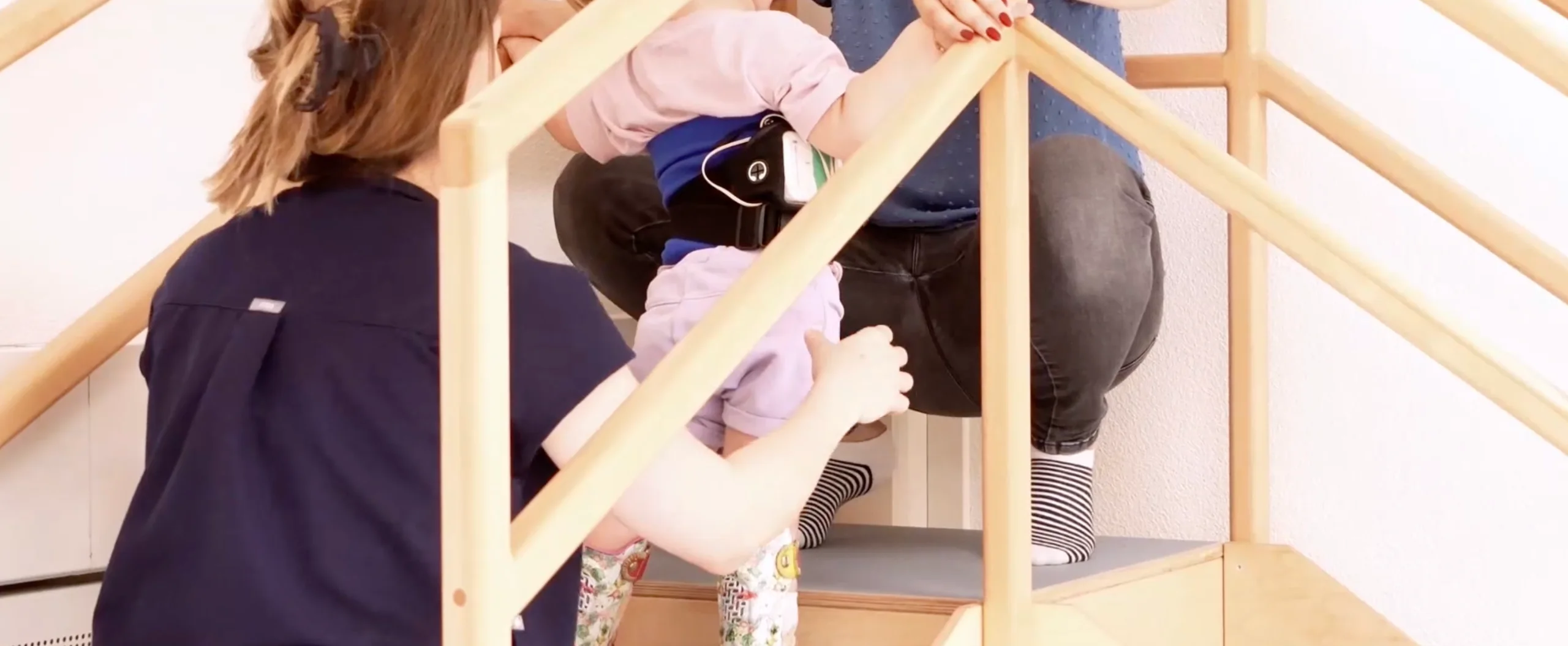
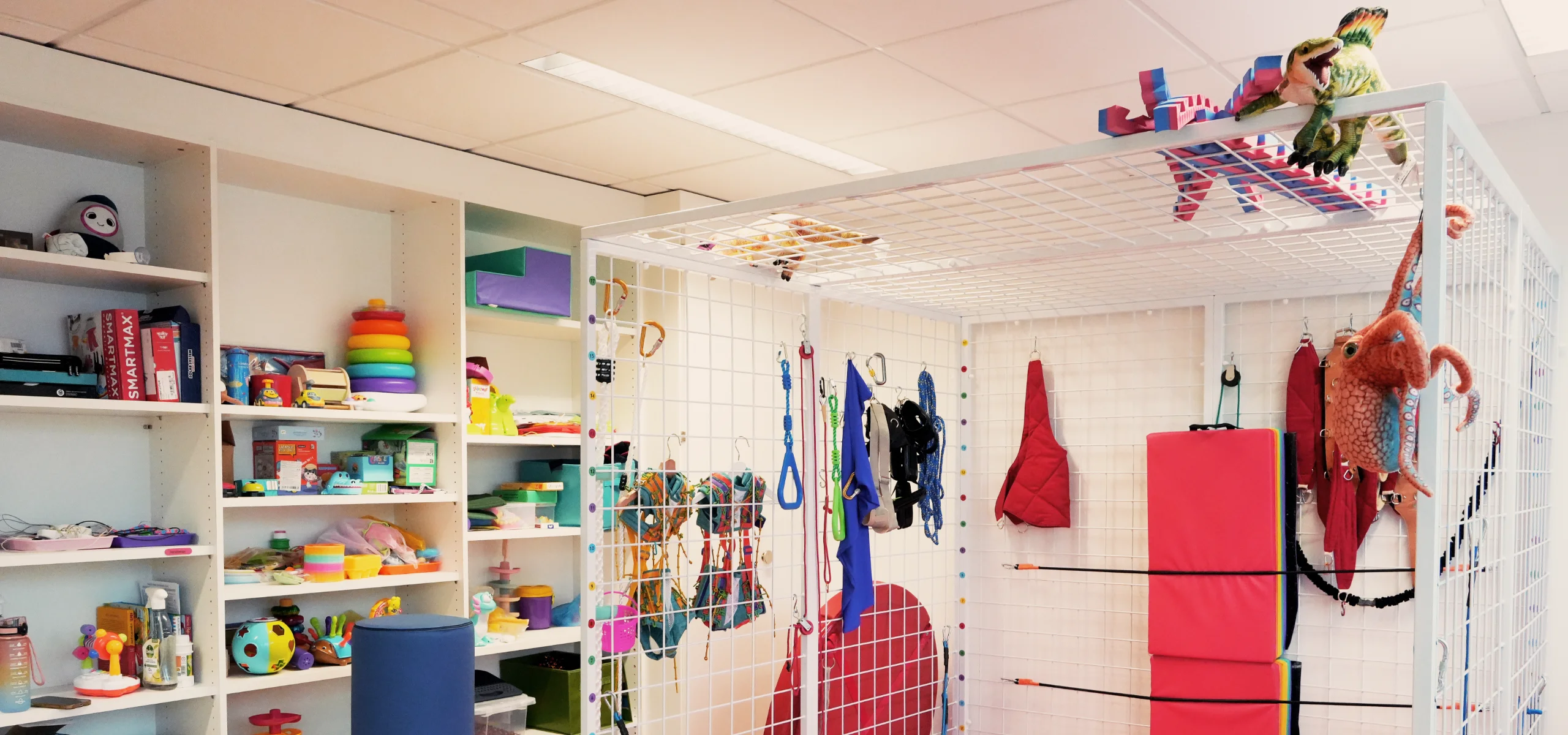
- Therapy that builds school skills. Active therapies such as DMI, suit therapy and the Spidercage build sitting balance, trunk control and walking — the foundations for learning at a desk and moving around school.
- Support through the school day. TheraTogs can support posture and alignment throughout the day. We are the TheraTogs experts: our certified fitters are recognised worldwide and were trained by the inventor of TheraTogs, Beverly (Billy) Cusick.
- Working with schools. With your agreement, we share practical advice and reports with teachers, assistants and your child’s other therapists, and — if you wish — act as your child’s medical case manager, so there is one point of contact.
- Our family portal is your direct line to the team at all times: speak to your therapists, upload videos from home, find your reports, invoices and therapy articles, and much more.
- Parent enablement. In our ORCA Enablement blocks we coach parents to become confident co-therapists, so your family becomes more independent.
A checklist for parents before the school year
- Have I met the class teacher and assistant, and explained how my child communicates?
- Is the seating right, and has the classroom layout been checked for access?
- Is there a plan for breaks, the playground, PE and school trips?
- Are personal care and medical arrangements written down?
- Do the therapists and the school know each other’s goals?
- Is there a date for the first review?
Questions parents often ask
Does my child have a right to attend a mainstream school?
International law, including the UN CRPD, recognises the right to inclusive education. In Switzerland, the cantons decide on schooling and are asked by federal law to encourage integration where it is possible and good for the child. Ask your cantonal special needs office or school psychology service about your options.
What if my child cannot speak?
Many children who cannot speak take part fully at school using signs, symbols or an AAC device. A speech and language therapist can assess which system suits your child, and the whole class can learn to use it.
Can therapy happen at school?
This depends on your canton and school. Some children receive therapy at school; others combine school with sessions or intensive blocks outside. We can advise on how to fit intensive therapy around the school year.
Do you work with families and schools outside Switzerland?
Yes. Families travel from all over the world to Zug for modern therapies and the latest advances in paediatric rehabilitation, and we provide reports and advice that schools at home can use. Teletherapy keeps support going between visits.
How do I prepare the school before my child starts?
Meet the class teacher and assistant early and explain how your child communicates, sits and moves best — a short, practical handover is worth more than a long medical report. Check seating and access, agree a plan for breaks, the playground, PE and school trips, and write down any personal care or medical arrangements.
What equipment might my child need at school?
It depends on the child. Common examples are a supportive chair or seating system, a standing frame, a walker or wheelchair, adapted pens and grips, sloped boards, a laptop or tablet, and an AAC device. A therapist can advise the school on what your child needs and how to set it up.
My child gets very tired at school. What helps?
Many children with neurological conditions tire more quickly, because moving and concentrating take more effort. Good seating, short movement breaks, a quiet corner and spreading demanding tasks across the day all help. Tell the school early, and ask for a plan if your child needs extra time.
Can my child take part in PE?
In most cases, yes. Almost every PE lesson can be adapted so that a child can take part in a meaningful way — with changed rules, equipment or roles. Ask the PE teacher and your child’s therapist to plan it together.
How can I explain my child’s disability to classmates?
With your child’s agreement, a short and simple explanation helps: what is different, how your child communicates and moves, and how classmates can join in. A film or a book can open the conversation. Teachers set the tone — when they treat your child as a capable member of the class, classmates follow.
Next step: talk to us
If you would like help preparing your child — and their school — for the next step, book a free introductory call through our contact page.
References
- United Nations. (2006). Convention on the Rights of Persons with Disabilities, Article 24: Education. ohchr.org
- UNESCO. (1994). The Salamanca Statement and Framework for Action on Special Needs Education. UNESCO.
- Swiss Federal Act on the Elimination of Discrimination against People with Disabilities (Disability Discrimination Act, BehiG), Article 20. fedlex.admin.ch
- Swiss Conference of Cantonal Ministers of Education (EDK). Special needs education. edk.ch
- World Health Organization. (2007). International Classification of Functioning, Disability and Health: Children and Youth Version (ICF-CY). WHO.
This article is general information and does not replace individual advice. Clinical content on this website is reviewed by Fabienne Theler, MSc PT.