English
 Deutsch
 Español
 Français
 Italiano
 Nederlands
 العربية
 中文 (中国)
 Dansk
 Svenska
 Norsk
 Suomi
 日本語
 Polski

Parent guides
Stroke in children: what parents need to know about recovery and rehabilitation
Children can have strokes too — before birth, as newborns, or later in childhood. Here is what a paediatric stroke is, the warning signs at every age, how it is treated, and how active, intensive rehabilitation helps a young brain rebuild movement.
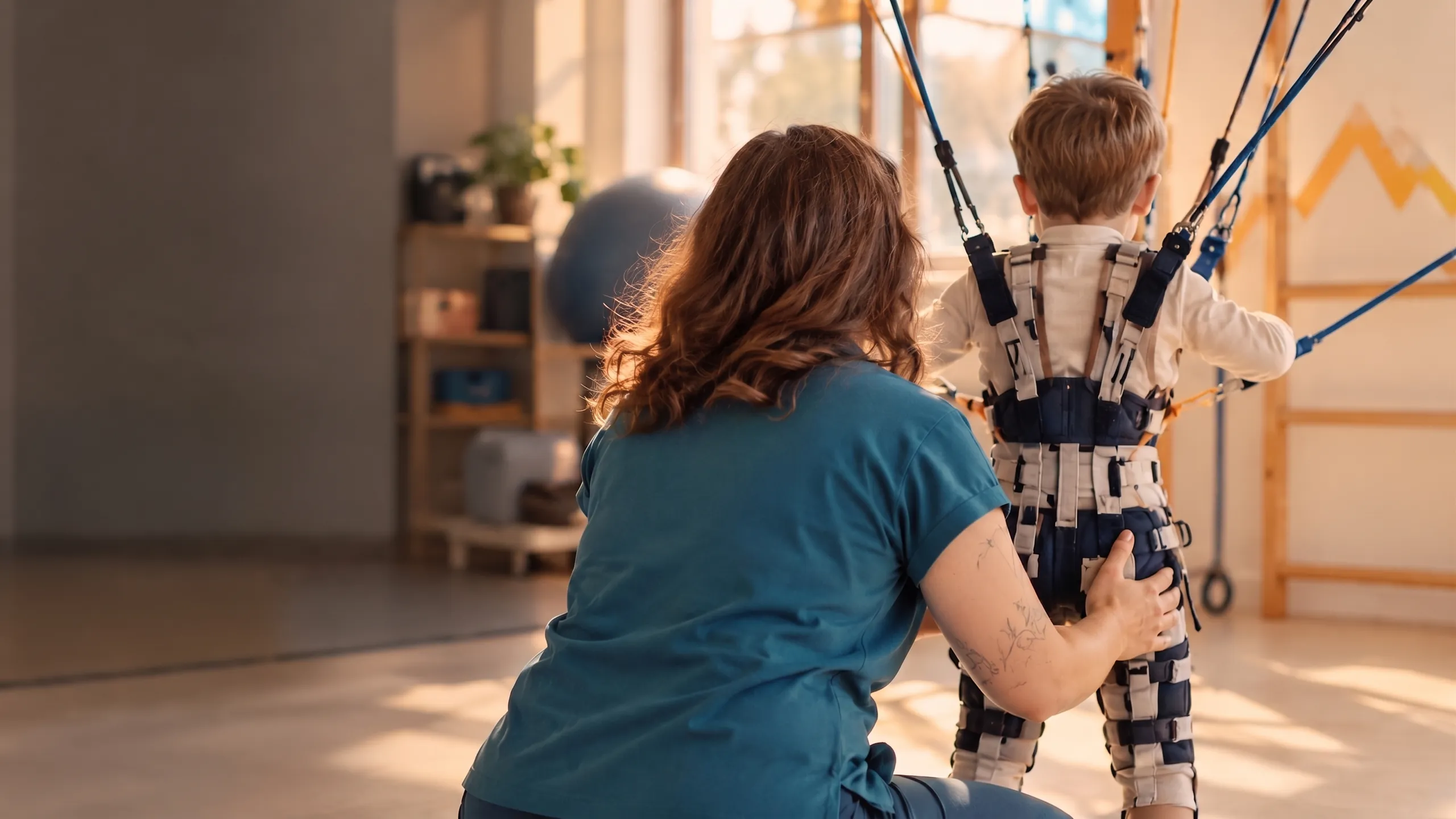
Most people think of stroke as something that happens to older adults. So when a doctor says the word about your baby or child, it can feel unreal. You are not alone: stroke in children is far rarer than in adults, but it happens more often than most parents realise — and a child’s brain has a remarkable capacity to recover. This guide gathers what parents most need to know, plainly and honestly.
What is a stroke in children?
A paediatric stroke (written “pediatric stroke” in American English) happens when the blood flow to part of a child’s brain is interrupted. Doctors also call it a cerebrovascular accident (CVA), and it belongs to a wider group of cerebrovascular disorders — conditions of the brain’s blood vessels. Without enough oxygen, brain cells in that area and the surrounding brain tissues are damaged, and the abilities they control — movement, speech, vision, swallowing or thinking — can be affected. There are two main types:
- Ischaemic stroke (ischemic stroke) — a blood vessel is blocked, usually by a clot. This is the more common type in children, though less dominant than in adults.
- Haemorrhagic stroke (hemorrhagic stroke) — a blood vessel bursts and bleeds into or around the brain, for example from abnormal blood vessels such as a tangle called an arteriovenous malformation. In children, haemorrhagic strokes make up a much larger share than in adults — close to half in many studies.
Doctors also group strokes by age:
- Perinatal stroke — around the time of birth, from late pregnancy to the first month of life. It is one of the most common causes of hemiplegic cerebral palsy, where one side of the body is weaker than the other.
- Childhood stroke — any time from one month to 18 years.
How stroke in children differs from adult stroke
Stroke is a rare condition in childhood. In the UK, the Stroke Association estimates that several hundred children and young people have a stroke each year — a small number compared with adult stroke, which is one reason it is so often missed. Three things make a stroke in children different:
- Different causes — not high blood pressure and hardened arteries, but heart conditions, blood disorders, infections and problems with the vessels themselves.
- Different clinical presentation — the stroke symptoms in infants can be subtle, and older children are often thought to have a migraine or a seizure first. Some other conditions also cause stroke like episodes, which makes careful assessment essential.
- A different recovery — a child’s brain is still developing, so effects may only show as the child grows, and the potential to adapt is greater.
Warning signs: what to look for at every age
In newborns
In newborn babies, a stroke rarely looks like a stroke. The most common first sign is a seizure, often affecting one arm or leg. Others are unusual sleepiness, floppiness or difficulty feeding. Many perinatal strokes cause no obvious signs at all in the first weeks.
In babies and toddlers
Many parents only notice months later — for example when their baby clearly prefers one hand before their first birthday, keeps one fist closed, or uses one arm or leg less when reaching, kicking or crawling. Babies do not normally show a strong hand preference this early, so it is worth discussing with your paediatrician.
In older children: think FAST
In older children the signs are similar to adults. The FAST test helps you remember them:
- Face — has one side of the face dropped? Can your child smile evenly?
- Arms — can they lift both arms and keep them up?
- Speech — is their speech slurred, confused or suddenly absent?
- Time — call emergency services straight away.
Arm weakness, difficulty speaking or slurred speech, difficulty walking, sudden trouble seeing, keeping balance, a sudden severe headache, dizziness, or a seizure. Sometimes symptoms appear and then disappear within minutes. This is called a transient ischaemic attack (TIA) or “mini-stroke”, and it is a warning sign that needs the same urgent medical attention.
Important: if you think your child is having a stroke right now, call emergency services immediately — 144 in Switzerland, 112 anywhere in Europe. Do not wait to see whether symptoms pass. In stroke, every minute counts.
How a stroke is diagnosed
Stroke in children is often recognised late, because the signs can look like other, more common problems — a migraine, a seizure disorder or an infection. Studies have found that the diagnosis is often delayed by many hours. A fast stroke diagnosis needs brain imaging, and UK clinical guidelines from the Royal College of Paediatrics and Child Health ask hospitals to scan a child with suspected stroke as quickly as possible — ideally within one hour of arrival. An MRI scan shows brain tissue in the most detail and is the preferred test; a CT scan is quicker but is often normal in the first hours of an ischaemic stroke. Doctors may score how severe the stroke is with the Paediatric National Institutes of Health Stroke Scale (PedNIHSS), a children’s version of the adult health stroke scale. Doctors will usually also check the heart, the blood vessels and the blood to look for a cause.
Causes and risk factors
In children, strokes have different causes than in adults. Known risk factors include:
- heart conditions, especially congenital heart disease;
- problems with the blood vessels in the brain (arteriopathies), including moyamoya, a rare narrowing of the brain’s arteries;
- sickle cell disease, in which red blood cells become sickle-shaped and can block small vessels, and other disorders of the blood cells, including clotting disorders;
- infections — including a recent chickenpox infection, which can raise the risk for several months;
- head or neck injury;
- a family history of clotting problems or vessel disease, which can mean an increased risk.
In many children, especially after a perinatal stroke, no single cause is found. That is hard to accept — but it is not something you did or could have prevented.
Treatment in hospital
Treatment in the first hours and days depends on the type of stroke and on the child’s age. Any suspected stroke needs immediate medical attention, because some treatments only work within a short time window. For a blocked vessel, some children — usually older children, treated quickly in a specialised centre — may receive clot-dissolving medicine (in adults, intravenous tPA is given within 4.5 hours of the first symptoms; in children its use is decided case by case) or have the clot removed through a thin tube. This mechanical thrombectomy is increasingly used in selected children with a blocked large artery. For a bleed, the team focuses on stopping the bleeding and protecting the brain, sometimes with surgery. Children with sickle cell disease may receive blood transfusions, and long-term transfusion therapy is a well-established way to reduce stroke risk in children at high risk.
After the acute phase, doctors work to prevent another stroke. Most children never have a second stroke, but the risk is real, especially when there is an underlying cause such as a vessel problem — which is why regular follow up care with your healthcare professionals matters.
Possible long-term effects
Every stroke is different, and so is every child. What a child can do afterwards depends on where the stroke occurred, how large it was and the child’s age. More than half of children live with some lasting effects. Possible long-term effects include weakness or stiffness on one side of the body (hemiplegia), difficulty with balance and fine motor skills, epilepsy, speech and swallowing problems, and changes in learning, attention or mood. Children who have had a stroke are more likely than their peers to experience depression and anxiety, so watching their wellbeing — and yours — is part of good care.
Living with the effects: school, feelings and family life
A stroke changes more than movement. Some effects appear only later, as school asks more of attention, memory and reading. Tell your child’s school what happened, and ask for a plan if your child tires quickly or needs extra time. Watch for changes in mood and sleep too — children may not have the words for what they feel.
Families carry a lot: hospital visits, therapy, time off work, travel and the financial burden that comes with all of it. It is normal to feel overwhelmed. Stroke associations, parent groups and your care team can help you find answers, connect with other families and plan the next steps. Young people affected by stroke often say that meeting others like them made the biggest difference.
Why a child’s brain can recover so well
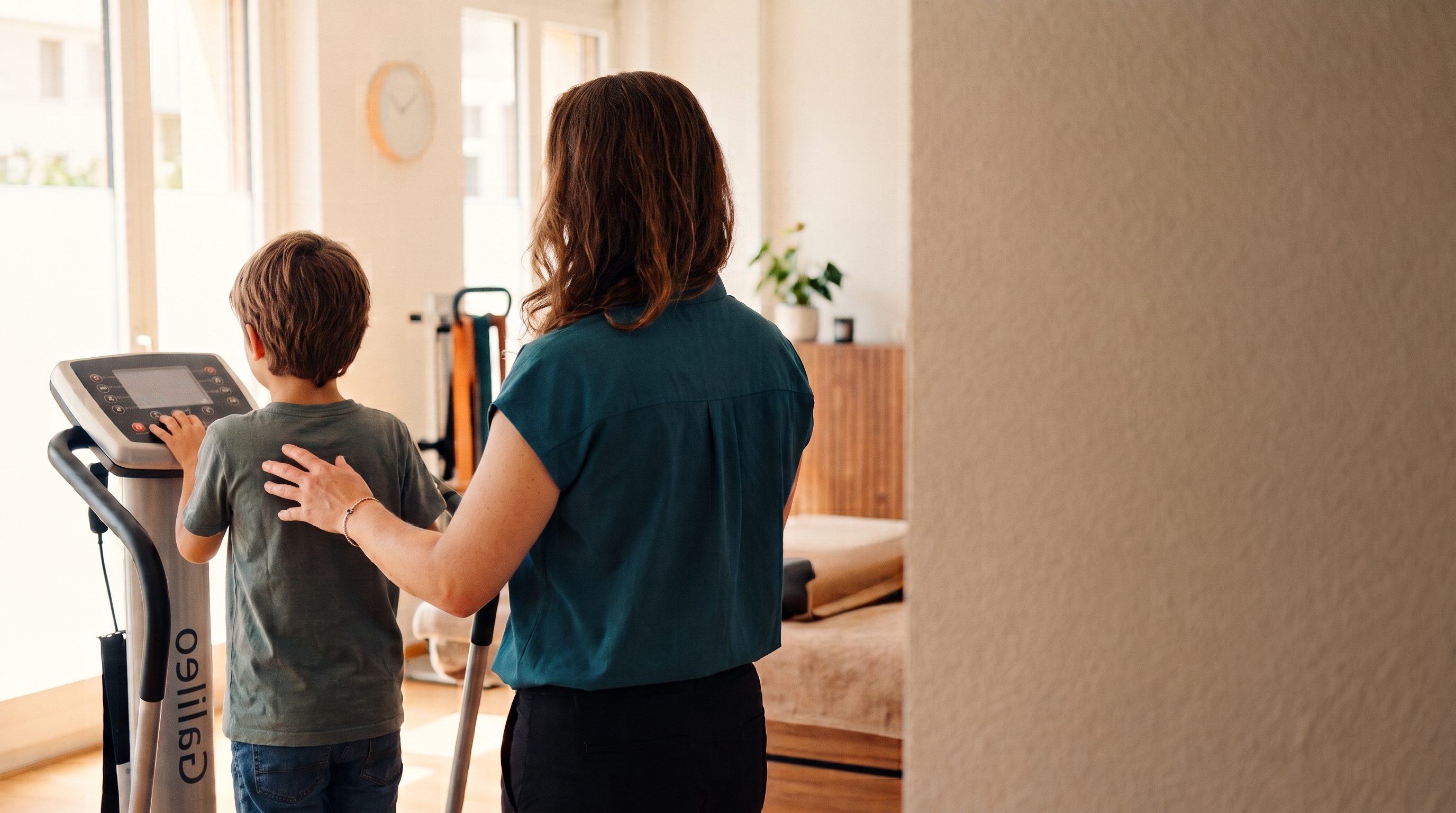
A child’s brain is still developing, and it is far more adaptable than an adult’s — whether the stroke happened before birth, in infants or in teenagers. This ability to form new connections is called neuroplasticity. Healthy areas of the brain can take over tasks that the injured area used to control — but they need the right challenge, often enough, to do it.
That is why the first years after a stroke matter so much, and why rehabilitation for children is most effective when it is active (the child does the movement), task-specific (practising real skills like reaching, standing or walking) and repetition-rich. Passive stretching alone rarely builds new movement, and motor impairment is easier to influence while the brain is still building its networks.
Modern stroke rehabilitation for children: what has changed
Paediatric neurorehabilitation has moved a long way from passive stretching and waiting to see what recovers. Modern, state-of-the-art rehabilitation after a stroke in childhood rests on a few clear principles:
- Active, task-specific practice — the child repeats real skills such as reaching, grasping, standing and walking, because that is what drives recovery in the brain.
- Intensity — concentrated blocks of therapy deliver far more meaningful repetitions than an occasional session.
- Making the weaker side work — approaches such as constraint-induced movement therapy and intensive bimanual training encourage children to use the affected arm and hand.
- Electrical stimulation paired with movement — impulses timed with the child’s own effort help weak muscles switch on.
- Objective measurement — standardised tests show what is changing in the child’s function and guide each next step.
- Coordinated stroke care — rehabilitation works best when therapists, doctors, school and family share the same goals.
- Family-centred care and tele-rehabilitation — parents become part of the team, and remote sessions keep progress going at home.
What rehabilitation looks like at Apexa QLA Suisse
We are a specialist centre for complex neuro-motor cases. Children come to us after perinatal and childhood strokes, often with hemiplegia, epilepsy or other conditions alongside, and often after other therapy has stalled. Complex cases are our focus, not the exception — and that experience shapes how carefully we plan.
Every child is different, so every plan should be too. At Apexa QLA Suisse in Zug, therapy after a stroke is planned with the ORCA Method (Objective Reasoning & Clinical Architecture), created by our lead therapist Fabienne Theler, MSc PT. ORCA decides which methods your child needs, in what order and at what intensity. Depending on your child, that can include:
- DMI (Dynamic Movement Intervention) — exercises against gravity that provoke automatic movement responses and help the brain build new strategies for sitting, standing and walking. Each exercise challenges the brain for a response it cannot yet make easily — and repeated often enough, those responses lay down new pathways. This is neuroplasticity at work: healthy parts of the brain learning to take over what the injured area used to control.
- TASES (task-specific electrical stimulation) — gentle impulses paired with active movement to wake up weak muscles and improve timing.
- Bamboo Braces — soft, dynamic elbow braces that help a weaker arm stay straighter at the elbow, so the hand can be used actively.
- Apexi Dynaflex Casting — to improve range and alignment so active therapy has more room to work.
- TheraTogs — soft, wearable strapping that supports alignment and body awareness through the day. We are the TheraTogs experts: our certified TheraTogs fitters are recognised worldwide and were trained by the inventor of TheraTogs, Beverly (Billy) Cusick. They assess, size and fit every system, and we train and certify other professionals too.
Children often train in intensive blocks of several sessions a day over one to four weeks, followed by a home programme so progress continues between visits. We measure progress with recognised tools such as the GMFM and Peabody scales, so you can see what changes — and show it to your doctors.
Measuring what matters: GMFM, Peabody-3 and the ICF-CY
We measure with internationally recognised tools. The GMFM (Gross Motor Function Measure) tracks gross motor skills such as lying and rolling, sitting, crawling, standing, walking, running and jumping. It is one of the most widely used outcome measures in paediatric rehabilitation (Russell et al., 1989).
The Peabody Developmental Motor Scales, third edition (Peabody-3) assess gross and fine motor development in young children, so we can see how your child’s skills compare with typical development and how they change over time (Folio & Fewell, 2023).
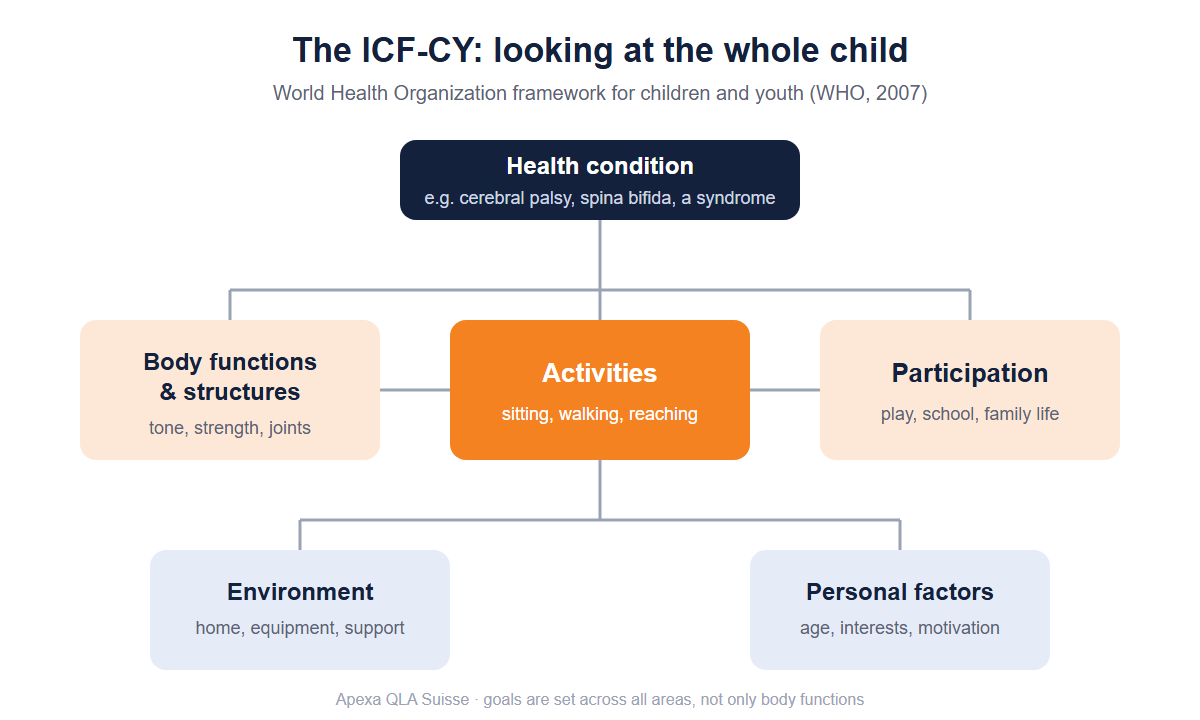
We plan with the ICF-CY — the World Health Organization’s International Classification of Functioning, Disability and Health for Children and Youth (WHO, 2007). It looks beyond the diagnosis at four areas together: body functions and structures, activities, participation in daily life, and the environment around your child. That is how we make sure therapy goals are goals that matter at home, at nursery and at school.
Beyond therapy: parent enablement and case management
Parent enablement. In our ORCA Enablement blocks we coach parents to become confident co-therapists, so your family becomes more independent and progress continues at home between visits.
Medical case management. If you wish, we also act as your child’s medical case manager — coordinating reports, appointments and communication with your doctors, specialists and therapists, so you have one point of contact.
Your family portal: a direct line to the team
Every family gets access to our family portal at fam.apexaqla.ch — your direct line to the team at all times. In the portal you can speak to your therapists, upload videos of your child at home so we can give feedback, find your child’s reports and progress measurements, see invoices and financial information, read articles about therapy, and much more.
What the research says
Research on rehabilitation and intensive therapy after childhood stroke is growing, and much of it comes from children with hemiplegic (unilateral) cerebral palsy, which is often caused by a perinatal stroke. A Cochrane review of constraint-induced movement therapy in children with unilateral cerebral palsy found it can improve the use of the affected arm and hand compared with low-dose or usual care (Hoare et al., 2019). A large systematic review of interventions for children with cerebral palsy rated constraint-induced movement therapy and intensive, goal-directed task training among the best-supported approaches (Novak et al., 2020). Across all of it, the common thread is active, goal-directed rehabilitation based on the best available evidence (Veras et al., 2016) — with progress measured, not assumed.
The three pillars of evidence-based practice. Good rehabilitation rests on three pillars that work together: the best available research evidence; clinical expertise — experienced therapists who know how to apply that research to one particular child; and the values, goals and preferences of the child and family. Research alone cannot tell us what is right for your child, and neither can experience or opinion alone. Evidence-based care brings all three together (Veras et al., 2016).
What progress can we expect?
We will not promise outcomes we cannot evidence. What we can say honestly is that many children make meaningful gains after a stroke, especially when therapy starts early and is intensive enough. Progress usually comes in steps: better trunk control, a more active weaker hand, more confident standing or walking. How much progress a child makes after a stroke depends on many things: your child’s age, the size and location of the stroke and their overall health all play a part — a careful assessment is the right starting point.
Your role as a parent
You are the most important member of your child’s therapy team. Daily life — play, dressing, eating, bath time — is full of chances to use the weaker side. We coach parents to turn these moments into practice, gently and without turning home into a clinic. Families travel from all over the world — including from across Europe and the Balkans — to Zug for modern therapies and the latest advances in paediatric rehabilitation. Families from across Switzerland and abroad travel to Zug for intensive blocks, and our concierge helps with travel and accommodation.
Questions parents often ask
Can a baby have a stroke before birth?
Yes. A perinatal stroke can happen in the last weeks of pregnancy, during birth or in the first month of life. It is often only recognised months later, when one side of the body develops differently.
Can a child fully recover from a stroke?
Some children recover very well; others live with lasting effects. Because a child’s brain is so adaptable, early and active rehabilitation gives the best chance of meaningful progress — but every child’s path is different.
When should rehabilitation start?
As soon as the medical team says your child is stable. Neuroplasticity is strongest early on, but it does not stop: children can still make progress years after a stroke.
Is intensive therapy suitable for young children?
Yes, when it is planned for the individual child. Intensive blocks are built around your child’s age, energy and goals, with real rest between sessions.
Do you treat children from outside Switzerland?
Yes. Families travel from all over the world — including from across Europe and the Balkans — to Zug for modern therapies and the latest advances in paediatric rehabilitation, often for intensive blocks, and we offer teletherapy to support you at home between visits.
What are the signs of a stroke in a child?
In older children, think FAST: a drooping face, weakness in one arm, slurred or absent speech — and time to call emergency services (144 in Switzerland, 112 anywhere in Europe). Newborns more often show a seizure, unusual sleepiness or difficulty feeding. In babies, a stroke is often only noticed months later, when one hand or one side of the body is used less.
My baby prefers one hand. Should I worry?
Babies do not normally show a strong hand preference before their first birthday. If your baby clearly favours one hand, keeps one fist closed or uses one arm or leg less, discuss it with your paediatrician. There can be several reasons, and an early check means that if therapy is needed, it can start early.
How long is an ORCA Intensive?
An ORCA Intensive lasts one to four weeks, with several hours of active therapy a day, paced with rest and play. We recommend the length after a free introductory call and an assessment, based on your child’s age, energy and goals. Between blocks, a home programme, weekly 50-minute sessions or virtual visits keep progress going.
What does an intensive cost?
Costs depend on the length and content of the block, so there is no single price. You will find our current prices on the costs and fees page, and we are transparent about costs from the very start.
Will health insurance pay for rehabilitation after a stroke?
That depends on your country, your insurer and your child’s situation, so we cannot promise coverage. We provide detailed reports and progress measurements that you can share with your doctors and your insurer. It is worth asking your insurer before you book, so you know what to expect.
Next step: talk to us
If your child has had a stroke — recently or years ago — we would be glad to look at their situation with you. Book a free introductory call through our contact page, or read more about how we work with stroke and its after-effects.
References
- Hoare, B. J., Wallen, M. A., Thorley, M. N., Jackman, M. L., Carey, L. M., & Imms, C. (2019). Constraint-induced movement therapy in children with unilateral cerebral palsy. Cochrane Database of Systematic Reviews. doi.org/10.1002/14651858.CD004149.pub3
- Novak, I., Morgan, C., Fahey, M., et al. (2020). State of the evidence traffic lights 2019: Systematic review of interventions for preventing and treating children with cerebral palsy. Current Neurology and Neuroscience Reports, 20, 3. doi.org/10.1007/s11910-020-1022-z
- Veras, M., Kairy, D., & Paquet, N. (2016). What is evidence-based physiotherapy? Physiotherapy Canada, 68(2), 95. doi.org/10.3138/ptc.68.2.gee
- Folio, M. R., & Fewell, R. R. (2023). Peabody Developmental Motor Scales (3rd ed.). Pro-Ed.
- Russell, D. J., Rosenbaum, P. L., Cadman, D. T., Gowland, C., Hardy, S., & Jarvis, S. (1989). The gross motor function measure: A means to evaluate the effects of physical therapy. Developmental Medicine & Child Neurology, 31(3), 341–352. doi.org/10.1111/j.1469-8749.1989.tb04003.x
- World Health Organization. (2007). International Classification of Functioning, Disability and Health: Children and Youth Version (ICF-CY). WHO.
This article is general information and does not replace a medical assessment. Clinical content on this website is reviewed by Fabienne Theler, MSc PT.