English
 Deutsch
 Español
 Français
 Italiano
 Nederlands
 العربية
 中文
 Dansk
 Svenska
 Norsk
 Suomi
 日本語
 Polski
 Português


Films & series
TV series about disability: 12 picks for families, with a therapist’s view
From Speechless and The A Word to Love on the Spectrum and Stranger Things — the best TV series about physical disability, autism, deafness and other conditions, which ones star disabled actors, which are for adults only, and which to watch with your children.

A film lasts two hours; a good series stays with a family for months, and viewers get to know a disabled character as a whole person rather than a single dramatic moment. Below are our twelve picks of TV series about disability, both drama and documentary, chosen by our team at Apexa QLA Suisse for honesty, warmth and what they can give families. For each we say what it shows well, what to know before you watch and who it is for. This is the third list in our series — see also our films about cerebral palsy and films about rare and genetic conditions, where you will also find Breaking Bad and Born This Way.
Our 12 picks at a glance
- Speechless (2016–2019, comedy) — best family comedy
- The A Word (2016–2020, drama) — best about a new diagnosis
- Love on the Spectrum (2019–, docuseries) — best documentary series
- Switched at Birth (2011–2017, drama) — best about deafness and sign language
- Stranger Things (2016–2025, drama) — best for adventure-loving teenagers
- Call the Midwife (2012–, drama) — best for the whole family on a Sunday evening
- Glee (2009–2015, musical comedy) — best for music-loving teenagers
- Atypical (2017–2021, comedy-drama) — for teenagers, with caveats
- Extraordinary Attorney Woo (2022, drama) — best international pick, with caveats
- Special (2019–2021, comedy) — adults only
- Sex Education (2019–2023, comedy-drama) — adults only
- Ramy (2019–2022, comedy-drama) — adults only
Why it matters who plays the role
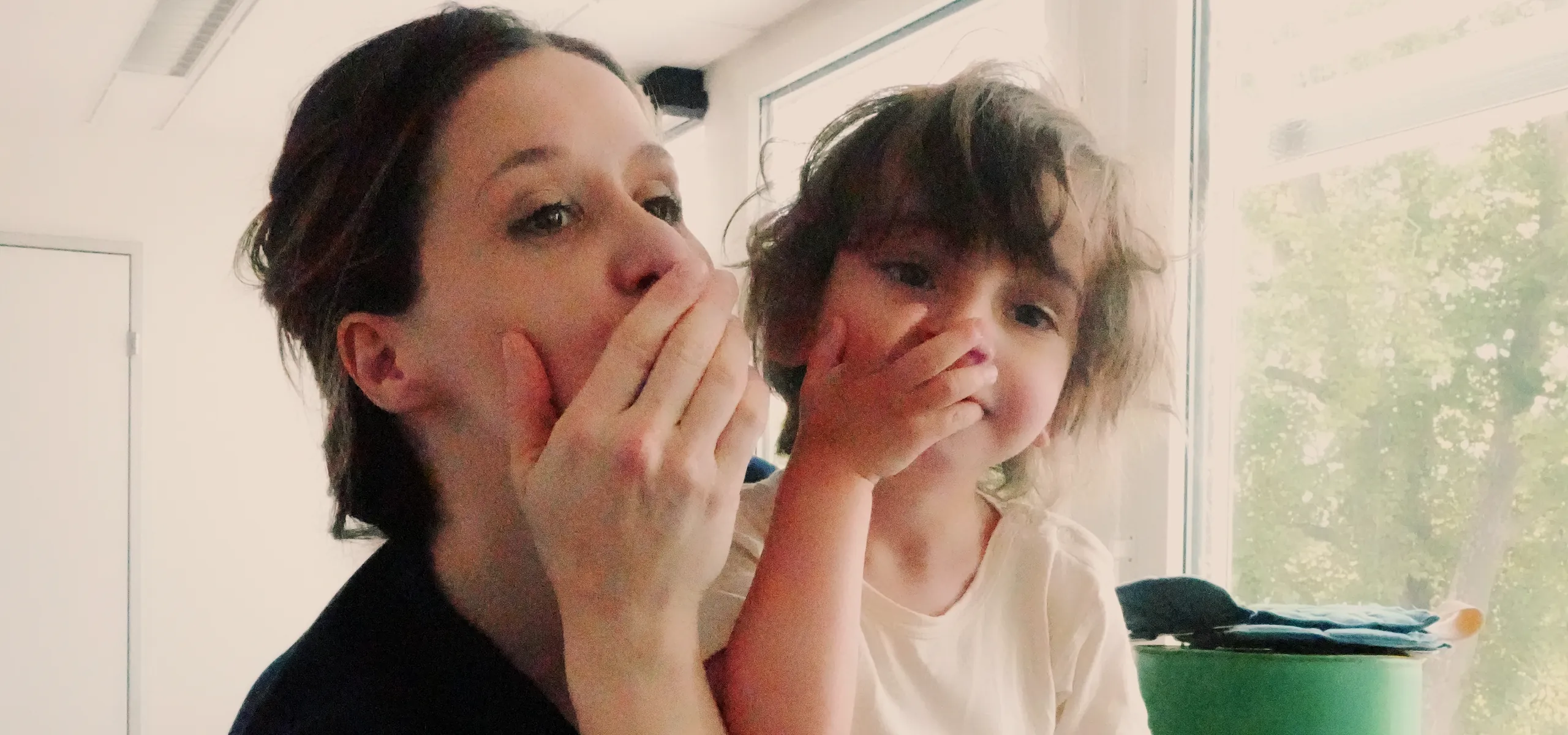
Television has a long habit of casting non-disabled actors as disabled characters. Series are slowly changing that. Micah Fowler, who has cerebral palsy, plays JJ in Speechless; Ryan O’Connell plays a version of himself in Special; Steve Way, who has muscular dystrophy, plays “Steve” in Ramy; George Robinson, a wheelchair user, plays Isaac in Sex Education; Daniel Laurie and Lauren Potter, who both have Down syndrome, play Reggie in Call the Midwife and Becky in Glee; and in Switched at Birth several deaf characters are played by deaf actors. Authentic casting means children see someone like them on screen. Where the lead is not played by a disabled actor, as in Atypical and Extraordinary Attorney Woo, we say so.
1. Speechless (2016–2019)
Comedy series · ABC (US) · three seasons · family viewing from about 10 years · actor with CP
JJ DiMeo is a teenager with cerebral palsy who does not speak. He points to words and letters on a board with a laser on his headgear, and his aide Kenneth becomes his voice. His mother, played by Minnie Driver, takes on every school and system, while his brother and sister try to have lives of their own. JJ is played by Micah Fowler, who has cerebral palsy. The series won a TCA Award for youth programming.
Our view: funny, sharp and true about access battles, assistance and siblings who feel overlooked. JJ is a real teenager — sarcastic, romantic and sometimes embarrassed by his mum. A brilliant way to talk about communication; see our guide to AAC for children.
2. The A Word (2016–2020)
Drama series · BBC One · three series · from about 12 years
Five-year-old Joe lives in the Lake District, loves music and shuts out the world through his headphones. When he is diagnosed with autism, his parents and wider family react in very different ways — denial, guilt, anger, fierce love. Based on the Israeli series Yellow Peppers by Keren Margalit. Its spin-off, Ralph & Katie (2022), follows a newly married couple played by Leon Harrop and Sarah Gordy, both of whom have Down syndrome and were among the first actors with a learning disability to lead a British TV drama.
Our view: almost every parent recognises the weeks after a diagnosis here: the arguments, the search for the right school, the grandparent who gets it wrong. Honest about strain on a marriage, so parents may want to watch first.
3. Love on the Spectrum (2019– )
Documentary series · ABC (Australia), then Netflix · from about 12 years · autistic participants
Young autistic adults look for love — first dates, speed dating, nerves and real joy. The original Australian series ran for two seasons from 2019; the American version, also directed by Cian O’Clery, has run on Netflix since 2022 and has won several Primetime Emmy Awards, including Outstanding Unstructured Reality Program.
Our view: gentle, warm and often very funny, and the participants speak for themselves. Some autistic reviewers have criticised the editing, the music and the amount of coaching from non-autistic experts as infantilising at times — worth discussing with teenagers who watch it.
4. Switched at Birth (2011–2017)
Drama series · ABC Family / Freeform (US) · five seasons · from about 12 years · deaf actors
Two teenage girls discover they were swapped as babies — and one of them, Daphne, is deaf. The families are thrown together, and much of the story takes place at a school for deaf students, with whole scenes in American Sign Language. It was the first mainstream series with several deaf and hard of hearing series regulars, including Sean Berdy and Marlee Matlin, who are deaf. Katie Leclerc, who plays Daphne, is hard of hearing. In 2013 it aired an episode told almost entirely in sign language, and the series received a Peabody Award.
Our view: a family drama that treats Deaf culture and sign language as a rich world, not a loss. Typical teen-drama storylines make it one for teenagers.
5. Stranger Things (2016–2025)
Sci-fi drama series · Netflix · five seasons · from about 13 years (frightening scenes) · actor with the condition
Friends in a 1980s American town face monsters and growing up. Dustin, the warm and funny heart of the group, has cleidocranial dysplasia, a rare genetic condition affecting bones and teeth. Gaten Matarazzo, who plays him, has the condition himself, and it was written into the character after he was cast. He raises funds for oral surgery for people with the condition.
Our view: not a series “about” disability — and that is the point. Dustin’s condition is mentioned plainly, and then he is simply the hero. Too frightening for young children.
6. Call the Midwife (2012– )
Period drama series · BBC One · family viewing from about 12 years · actor with Down syndrome
Midwives and nuns care for mothers and babies in London’s East End from the late 1950s onwards. Since 2017 the cast has included Reggie, a young man with Down syndrome who is taken in by the Buckle family after his mother’s death. He is played by Daniel Laurie, who has Down syndrome himself. Series five also follows a family whose baby is affected by thalidomide.
Our view: Reggie is loved, funny and independent-minded, and his storylines about work, friendship and where to live are handled with care. Childbirth and some hard historical stories mean parents should watch with younger viewers.
7. Glee (2009–2015)
Musical comedy-drama series · FOX (US) · six seasons · from about 12 years · actress with Down syndrome
A high-school choir of misfits sings its way through teenage life. Becky Jackson, a confident cheerleader with Down syndrome, appears across all six seasons, played by Lauren Potter, who has Down syndrome and was appointed to the US President’s Committee for People with Intellectual Disabilities in 2011. The series also has a main character who uses a wheelchair, Artie, played by a non-disabled actor — a casting choice disability advocates criticised, and which the actor, Kevin McHale, has since said he would not make today.
Our view: Becky is bossy, ambitious and allowed to be unkind sometimes — a refreshing change from saintly portrayals. Uneven, but fun for music-loving families.
8. Atypical (2017–2021)
Comedy-drama series · Netflix · four seasons · from about 14 years
Sam, an autistic teenager who loves Antarctica and penguins, decides he wants a girlfriend. His quest shakes up the family, especially his protective mother and his sister Casey. The first season was criticised by autistic viewers for casting a non-autistic lead, Keir Gilchrist, and for stereotypes. From season two the producers brought in autistic writers and actors, including several autistic young people as Sam’s peers.
Our view: good on family dynamics and on the sibling who “has to be fine”. Watch it knowing the criticism, and let autistic voices, not the series, have the last word on what autism is like. Some sexual content.
9. Extraordinary Attorney Woo (2022)
Legal drama series · ENA (South Korea) and Netflix · 16 episodes · from about 12 years · Korean with subtitles
Woo Young-woo, an autistic young lawyer with an extraordinary memory and a love of whales, joins a big law firm in Seoul and has to win over colleagues and clients who doubt her. Played by Park Eun-bin. The series was a worldwide hit and won the Grand Prize for television at the Baeksang Arts Awards.
Our view: charming and kind, and it sparked a real debate in Korea about autism and inclusion. But some parents of autistic children called it a fantasy, and Young-woo’s genius fits a familiar stereotype — most autistic people do not have extraordinary talents. Enjoy it as a fairy tale with a good heart.
10. Special (2019–2021)
Comedy series · Netflix · adults only · actor with CP
Ryan O’Connell writes and stars in this semi-autobiographical series, based on his memoir. Ryan has mild cerebral palsy and at first lets new colleagues think his limp comes from a car accident. Short episodes about work, friendship, dating and self-acceptance; four Emmy nominations.
Our view: one of very few portraits of a young adult with mild CP. Explicit sexual content — for adults and, at parents’ discretion, older teenagers.
11. Sex Education (2019–2023)
Comedy-drama series · Netflix · adults only · actor who uses a wheelchair
A British school, a teenager whose mother is a sex therapist, and his classmates. From series two, Isaac, a wheelchair user, joins the story. George Robinson, who plays him, uses a wheelchair after a spinal cord injury he sustained playing rugby at 17; the part was rewritten around his own disability once he was cast.
Our view: rare in showing a disabled young man as desirable and complicated, including in an intimate storyline. Very explicit throughout — not for children.
12. Ramy (2019–2022)
Comedy-drama series · Hulu · adults only · actor with muscular dystrophy
Ramy Youssef plays a young Egyptian-American Muslim in New Jersey torn between faith and modern life. His best friend Steve is played by Steve Way, who has muscular dystrophy and has been Youssef’s friend since childhood. The series won a Peabody Award, and Youssef a Golden Globe.
Our view: Steve is crude, funny, angry and nobody’s inspiration — a disabled adult with his own wants and his own storylines. Strong adult content.
What these series can mean for parents and siblings
Series about disability can be comforting, painful and funny in the same episode. Many parents tell us a scene felt like their own life: the school that says no, the relative who says the wrong thing. A few things are worth keeping in mind:
- Every child is different. One character with CP, autism or Down syndrome is one person — not your child, and not a prediction.
- Siblings need their own story. Speechless, The A Word and Atypical all give brothers and sisters their own frustrations and loyalty. Afterwards, ask your other children which character they felt most like.
- Ordinary is powerful. In Stranger Things or Call the Midwife, the disabled character is simply part of the gang or the family. For many children that matters more than any “issue” episode.
How we work with children with disabilities
At Apexa QLA Suisse in Zug we work every day with children with physical disabilities, neurodevelopmental and chronic conditions — and complex cases are our focus. We use modern, active rehabilitation rather than passive treatment:
- every plan is built with the ORCA Method (Objective Reasoning & Clinical Architecture), created by our lead therapist Fabienne Theler, MSc PT, so each goal follows from the child’s own findings rather than the label of a diagnosis;
- DMI uses neuroplasticity — the brain’s ability to form and strengthen connections through active, repeated practice — and, with suit therapy and the Spidercage, builds head and trunk control, balance, standing and walking;
- TheraTogs support alignment through the day — we are the TheraTogs experts: our certified fitters are recognised worldwide and were trained by the inventor of TheraTogs, Beverly (Billy) Cusick;
- we measure progress with the GMFM and Peabody-3 and set goals with the ICF-CY, including participation at school and at home;
- ORCA Intensives of one to four weeks, parent enablement so progress continues at home, and — if you wish — medical case management.
Read our practical guides to inclusion at school and AAC for children.
Questions parents often ask
What is the best series about disability to watch with siblings?
Speechless is our first choice for families with children from about ten: funny, honest and fair to the brother and sister. For teenagers, Switched at Birth and Call the Midwife also work well together.
Which series star disabled actors?
Speechless (Micah Fowler, CP), Special (Ryan O’Connell, CP), Ramy (Steve Way, muscular dystrophy), Sex Education (George Robinson, spinal cord injury), Call the Midwife (Daniel Laurie, Down syndrome), Glee (Lauren Potter, Down syndrome), Stranger Things (Gaten Matarazzo, cleidocranial dysplasia), Switched at Birth (several deaf actors) and Ralph & Katie. In Love on the Spectrum the participants are themselves.
Are there series about wheelchair users?
Yes. JJ in Speechless uses a wheelchair, and Isaac in Sex Education uses one after a spinal cord injury (adults only). For adults, the older documentary series Push Girls (SundanceTV, 2012–2013) followed women who use wheelchairs after injury or illness.
Which series about autism suit teenagers?
Love on the Spectrum and Extraordinary Attorney Woo suit most teenagers; Atypical suits older teenagers. Talk together about the criticism each has received.
Which series on this list are not for children?
Special, Sex Education and Ramy are for adults only. Stranger Things is frightening for younger children, and Atypical has sexual content. Each entry gives a suggested age.
Are there series about deaf children and teenagers?
Switched at Birth is the best-known drama. The documentary series Deaf U (Netflix, 2020), set at Gallaudet University, is made by deaf people but focuses on students’ social lives and is for adults.
Is there a series that shows a child who uses a communication device?
Speechless. JJ uses a letter and word board with a head pointer, and an aide who speaks for him.
Can I suggest a series for this list?
Please do. We update our lists regularly — send us your favourites through our contact page.
Next step: talk to us
If your child has a physical disability, a neurodevelopmental or a chronic condition and you would like to know how modern rehabilitation could help, book a free introductory call. Families travel from all over the world to Zug for modern therapies and the latest advances in paediatric rehabilitation.
Series selection and reviews by the Apexa QLA Suisse team. Clinical content on this website is reviewed by Fabienne Theler, MSc PT.