English
 Deutsch
 Español
 Français
 Italiano
 Nederlands
 العربية
 中文
 Dansk
 Svenska
 Norsk
 Suomi
 日本語
 Polski
 Português


Therapy explained
TheraTogs therapy explained: how it works, why we use it in ORCA — and why the fitting matters
A thin garment and a few elastic straps — but placed by a certified fitter and built into a plan, TheraTogs keep therapy working all day. A therapist’s guide for parents.
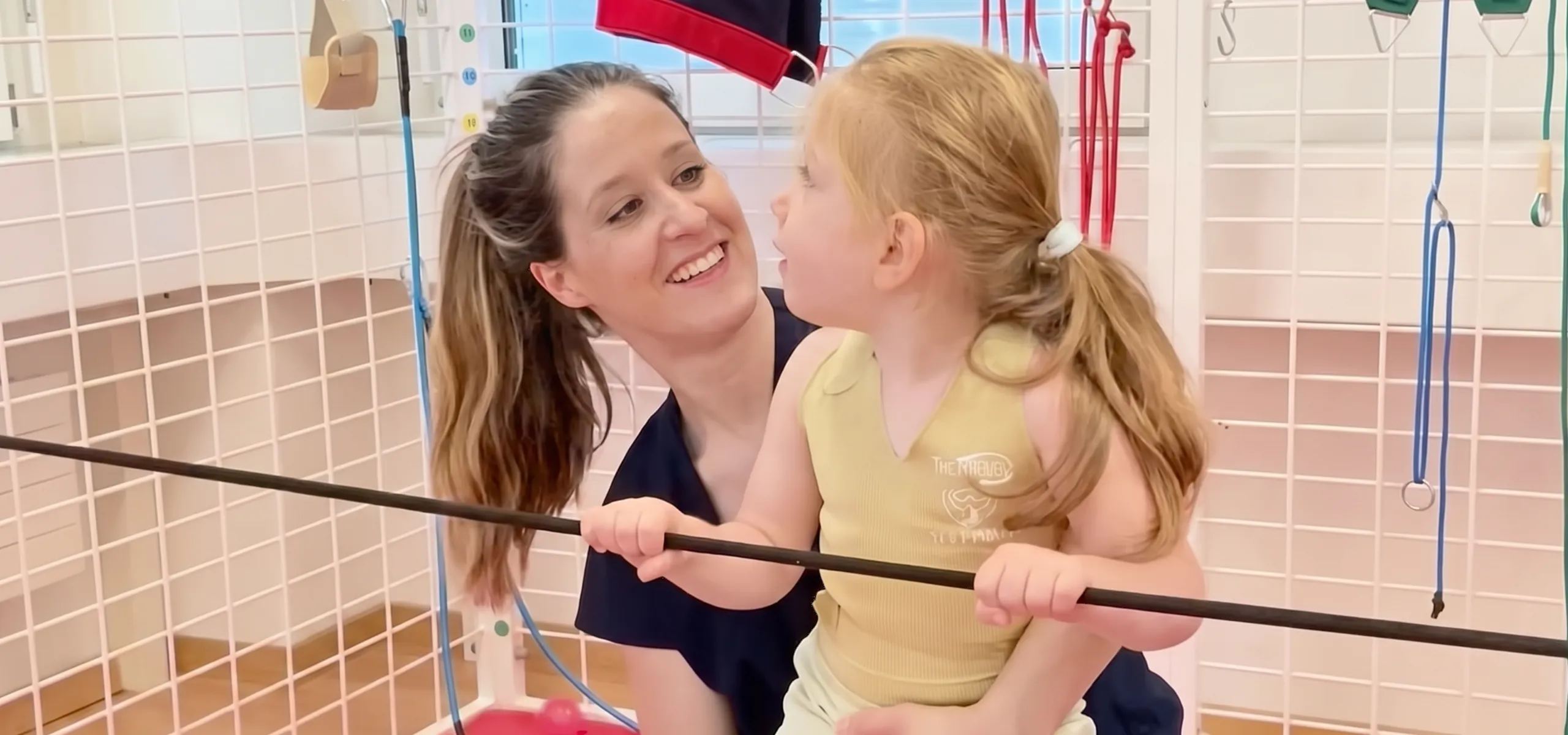
“Should my child wear TheraTogs — and will they really make a difference?” Parents usually ask us this after seeing a child in a soft, strapped garment at the centre, in a video or on social media. It is a fair question, because TheraTogs look simple: a thin undergarment and a few elastic straps.
However, the straps are only as good as the reasoning behind them. In this guide we explain what TheraTogs therapy is, how it works, which systems we fit, how it fits into ORCA — our clinical framework — and what the research says. We also explain why the fitting matters so much, and why we became a certified TheraTogs centre. At the end, you will find a parent FAQ, our video and links to the systems in our Lädeli shop.
What is TheraTogs therapy?
A soft orthosis your child wears all day
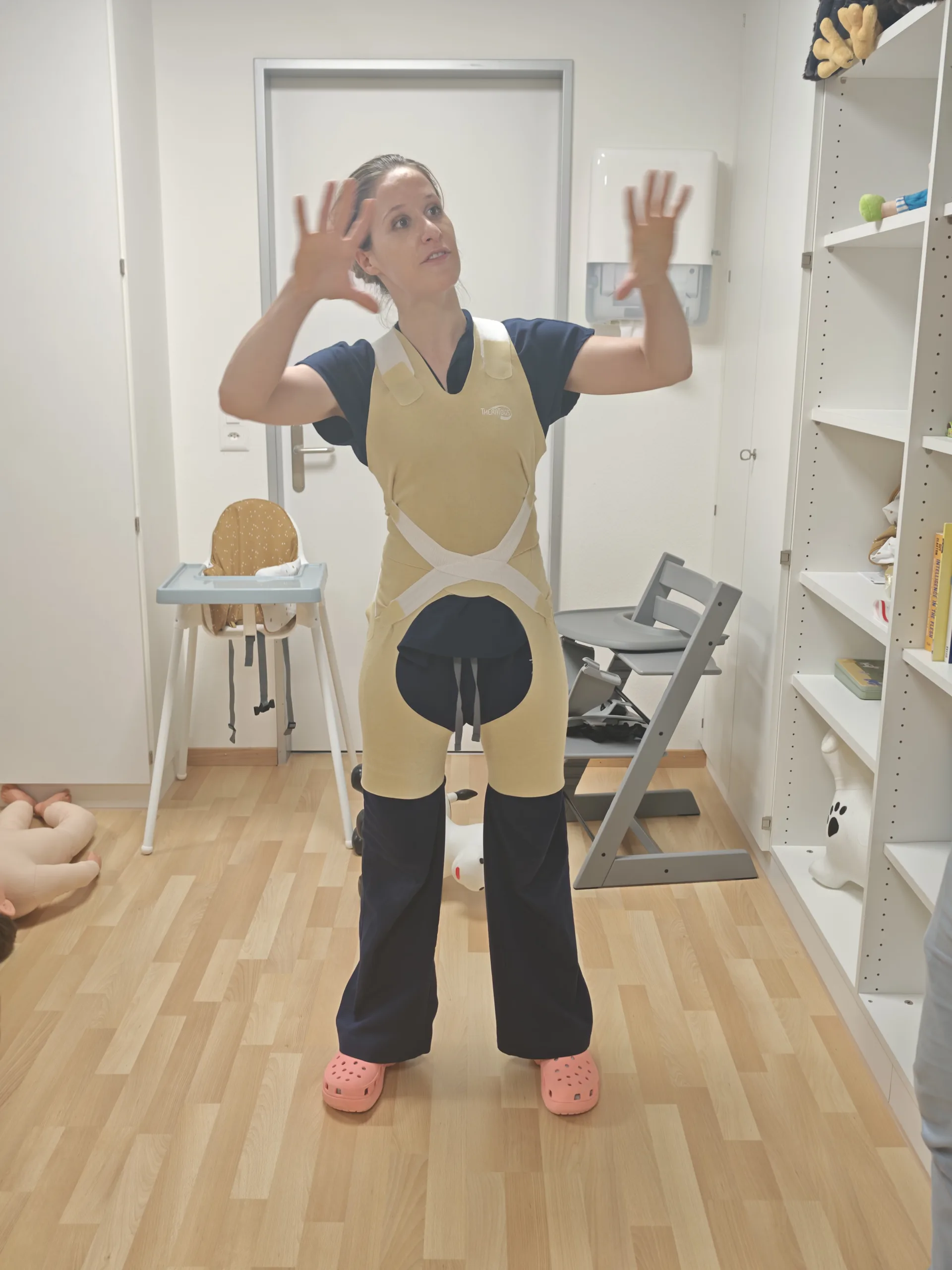
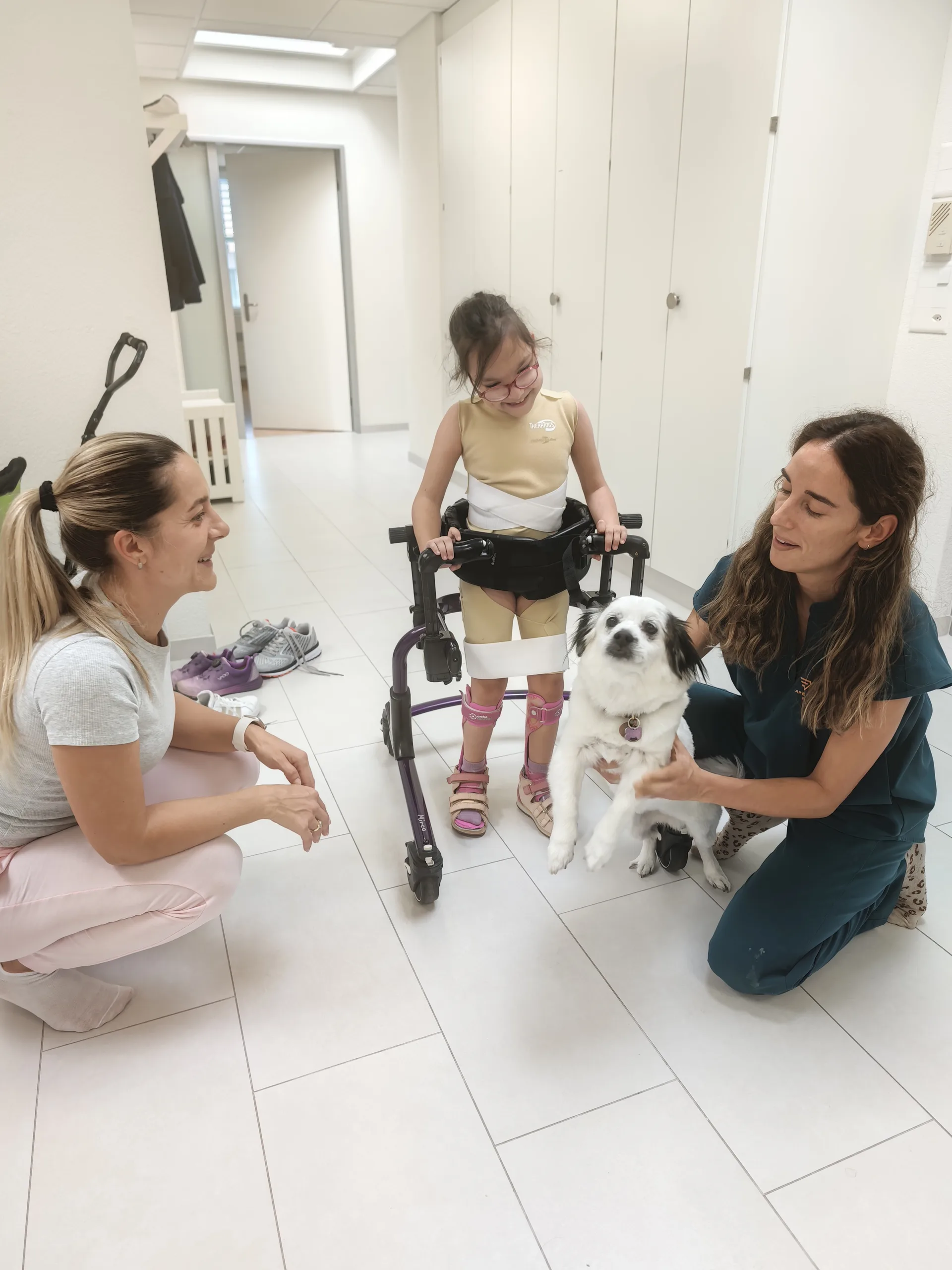
TheraTogs therapy uses a soft, wearable orthotic system: a thin, breathable undergarment combined with elastic straps that a trained therapist positions on the body. The straps attach to the fuzzy surface of the garment with hook-and-loop, so the therapist can place each one exactly where your child needs support. Together, they gently guide posture and joint alignment and give the body constant sensory feedback.
TheraTogs are a medical device that a trained clinician selects and applies; they are used in paediatric physiotherapy and clinical rehabilitation. Unlike a rigid brace, TheraTogs do not hold the body still. Your child can still crawl, sit, stand, walk and play. Because the system is worn discreetly under normal clothes, it keeps working at home, at nursery or school and at the playground — long after the therapy hour has ended.
Who invented TheraTogs?
TheraTogs were developed by the American physical therapist Beverly “Billi” Cusick, PT, MS, who has spent decades working on alignment, posture and gait in children with neuromotor conditions. She began developing the system in the late 1990s, and TheraTogs have been on the market since 2002 — so therapists and families now have more than 20 years of experience with them. She wrote a widely used textbook on casting and splinting for children with neuromotor conditions and published research on assessing leg alignment in the journal Physical Therapy (Cusick & Stuberg, 1992). Today she trains TheraTogs fitters through Progressive GaitWays. Our own fitters were trained by her.
TheraTogs in one minute:
- A soft undergarment plus elastic straps, placed individually by a trained therapist.
- Gentle, all-day alignment and proprioceptive input — without rigid bracing.
- Worn under everyday clothes, for a wear schedule your therapist sets.
- Never off-the-shelf: system, size and strapping are chosen at a fitting.
- At Apexa, always part of an ORCA plan with goals and measured progress.
How TheraTogs work
TheraTogs work through three mechanisms that support each other.
1. Gentle alignment, for hours at a time
Each strap pulls lightly in a chosen direction — for example, to rotate a thigh outwards, to support the trunk, or to help lift the front of the foot. As a result, joints spend more of the day in a better position. Bones, muscles and joints adapt to the positions and loads they experience every day, so hours of better alignment matter more than a few minutes on a treatment table.
2. Constant proprioceptive feedback
The garment and straps give steady input to the skin and the joints. In other words, they keep “reminding” the nervous system where the body is and how to hold itself. Many kids with low tone, poor body awareness or coordination difficulties respond to this input with better posture and steadier movement.
3. More practice: little and often
Progress in neuro-motor therapy comes from repetition. A child may spend two or three hours a week in therapy sessions, but many waking hours at home. TheraTogs extend the dose: what your child practises in a session is reinforced while they play, eat and move through the day. That carry-over is the real reason we use them.
Finally, the wear time is built up gradually. Your therapist sets a wear schedule — usually starting with short periods and increasing as your child’s skin and body get used to it.
The TheraTogs systems we fit
TheraTogs is a family of systems rather than a single product. At a fitting, we choose the system that matches your child’s goal. These are the ones we fit and stock at our centre in Zug:
- TheraTogs ULTRA — Lower Extremity: full lower-body strapping for hip, knee and foot alignment and for gait.
- Posture & Torso Alignment (PTA): the core system for trunk control and posture, available as single, double and triple kits.
- TherAlign™ Dragonfly TLSO: a soft spinal orthosis system for trunk support and alignment.
- Ankle Dorsiflexion Assist (DFA): targeted support to help lift the front of the foot and improve foot clearance when walking.
- Wunzi and Wunzi2Grow: systems for babies and infants, including a two-size grow set.
- Full-body TheraTogs system: whole-body strapping for complex postural needs.
You can see the systems in our Lädeli. Please note, however, that we only order a system after a fitting, never online without an assessment: the wrong size or strapping can do more harm than good.
Who TheraTogs can help — and when not
We consider TheraTogs for children whose posture, alignment or body awareness needs support, for example children with:
- cerebral palsy — including spastic diplegia and hemiplegia, at different GMFCS levels;
- low muscle tone (hypotonia) and Down syndrome;
- developmental coordination difficulties, ataxia and balance problems;
- torticollis and postural asymmetry;
- genetic syndromes with motor delay;
- alignment support after orthopaedic surgery, in agreement with the surgeon.
When we are careful — or say no
TheraTogs are not right for every child. Before a fitting, we check skin condition and sensitivity, circulation, breathing and any medical issues. The manufacturer also lists situations that need special caution or rule TheraTogs out, such as certain heart-rhythm problems, a shunt in the abdomen or fractures that have not healed. In addition, for children whose legs are rotated, we assess the bones first, because hip-rotation strapping is only safe when we know where the rotation comes from. Above all, if the garment causes pain, red marks that do not fade or distress, we stop and adjust. That is part of why a fitting and follow-up are essential.
How TheraTogs fit into ORCA
At Apexa, TheraTogs never stand alone. They sit inside ORCA — Objective Reasoning & Clinical Architecture, the clinical framework behind every child’s therapy plan, created by Fabienne Theler. ORCA is the umbrella over all our methods: we assess your child, reason through their profile and build one coherent plan. Here is what each letter means for TheraTogs:
What each ORCA letter means for TheraTogs
- O — Objective: before a fitting, we measure. GMFM, Peabody-3, posture and alignment findings and ICF-based goals give a clear baseline.
- R — Reasoning: we decide whether TheraTogs are the right tool for this goal right now — and which system, which straps and how many hours a day.
- C — Clinical: a certified fitter sets up the strapping, and your therapist uses it alongside active therapy, suit therapy, DMI or other methods.
- A — Architecture: the wear schedule, the review dates and the re-fitting as your child grows are planned — and changed when the measurements say so.
Why this matters
A strap that helped last year can hold back progress this year. Because ORCA reviews the goals and re-measures, the strapping keeps matching your child. This is also what international guidelines for children with cerebral palsy recommend: goal-directed, task-specific and family-centred therapy, with outcomes measured over time. Read more about the ORCA Method and our assessment.
The best therapy doesn’t stop at the door. TheraTogs keep the right alignment working all day — when they are fitted right and part of a plan.
Our clinical position at Apexa QLA SuisseTheraTogs, suits and DMI: how they work together
TheraTogs or a Lycra suit?
Parents often ask how TheraTogs differ from a dynamic Lycra suit. A Lycra suit is one garment that compresses the trunk and limbs. TheraTogs, by contrast, combine a thin garment with individual straps, so each strap can target one joint or body segment. For precise, hands-on therapy, we therefore see TheraTogs as the more versatile choice: the strapping can be adjusted as goals change and as your child grows.
TheraTogs and intensive suit therapy
TheraSuit and the PediaSuit Protocol use a stiffer suit with bungee cords during intensive sessions. They do a different job: they load the body during active training. TheraTogs, on the other hand, carry alignment into daily life between sessions. Many children benefit from both, in the order ORCA sets.
TheraTogs and DMI
DMI is a structural tool of graded exercises that challenge the nervous system during a session. TheraTogs complement it: what your child builds on the table is supported in daily life. Read our guide to Dynamic Movement Intervention to see how we combine the two.
Why the fitting matters: our certification
TheraTogs only work when they are fitted right: the correct system, the correct size, the correct straps and a wear schedule that matches your child’s goals. That is why we invested in becoming specialists.
- Official TheraTogs centre: Apexa QLA Suisse is an official TheraTogs centre and part of the European TheraTogs partner network.
- Certified fitters: our fitters are certified and were trained by the inventor of TheraTogs, Beverly Cusick.
- We train others: we certify therapists and other professionals as TheraTogs fitters — the theory online and the hands-on part in our lab in Zug. See trainings and courses.
What happens at a fitting
First, we assess posture, tone, alignment and your goals. Then we choose the system, take measurements and configure the strapping. Next, we order the correct size and show you, step by step, how to put it on and adjust it at home. Finally, we plan follow-up and re-fitting as your child grows. More on our certified fitters page.
What the research says — honestly
Families deserve a straight answer on evidence. Research on TheraTogs is still small, but it is growing — and so far it points in a positive direction. Several randomised controlled trials have now been published, most of them in children with cerebral palsy.
What the trials found
- Balance, trunk control and walking endurance: in a randomised controlled trial with 34 children aged 8–10 with spastic diplegic cerebral palsy, children who wore TheraTogs 8–10 hours a day for 12 weeks alongside physiotherapy improved more in balance, trunk control and six-minute walking distance than children who had physiotherapy alone (Emara et al., 2024).
- Balance and leg strength in younger children: a second trial by the same group, with 34 children aged 5–8, found greater gains in balance and leg strength with TheraTogs; self-care scores, however, did not improve significantly (Emara et al., 2024).
- Walking with rotated legs: in a trial with 57 children aged 6–8, TheraTogs combined with ankle-foot orthoses gave the best gait results, ahead of TheraTogs alone and no orthosis (Abd El-Kafy, 2014).
- Dyskinetic cerebral palsy: two smaller trials reported better gait and balance when TheraTogs were added to exercise training (El-Shamy & Abd El-Kafy, 2021; 2022).
- Early studies: a small study of five children wearing TheraTogs for 12 weeks found better hip extension and motor scores (Flanagan et al., 2009). In adults after stroke, TheraTogs increased hip muscle activity during walking (Maguire et al., 2010).
What this means — and what we still need
On the other hand, the studies are small, come from a few research groups and usually compare TheraTogs plus therapy with therapy alone. Systematic reviews of therapy suits and garments therefore rate the certainty of the evidence as low to limited, while noting positive effects on gait (Almeida et al., 2017; Belizón-Bravo et al., 2021). In short, the results are encouraging and more, larger studies are needed.
That is exactly why we never promise results from a garment alone. Instead, we combine the research with clinical expertise and your family’s goals — the three pillars of evidence-based practice — and we measure your child’s own progress with GMFM and Peabody-3, so you can see whether TheraTogs are helping.
Questions to ask before your child gets TheraTogs:
- Is the fitter certified, and who trained them?
- Which goal is this system for — and how will we measure it?
- How many hours a day should my child wear it, and how do we build up?
- What should I watch for on the skin, and when should I call you?
- When is the next review or re-fitting planned?
With us, you are never on your own: our TheraTogs concierge service
At Apexa QLA, every family gets our TheraTogs concierge service. We answer all your questions, help you and guide you through your whole TheraTogs journey. The fitting at our centre takes around 90 minutes and includes hands-on instruction for parents, so you can put on and check the system with confidence at home. After that, our TheraTogs technical support is there for you via the Family Portal whenever you need help. Ready to start? Book a fitting.
Frequently asked questions
What are TheraTogs made of?
Two parts: a soft, stretchy garment and elastic straps. The ULTRA systems we fit are made of GoldTone, the manufacturer’s own latex-free fabric. It is golden tan, so it shows less under clothes, and it has a breathable foam lining that grips the skin gently without any glue. The straps’ hook-and-loop tabs attach anywhere on the outer surface, which is what makes the system so adjustable. According to the manufacturer, GoldTone stretches only up to a set limit and recovers its shape overnight, so the corrections keep working through the day. Care is simple: a gentle machine wash and air-drying. We explain the details for your child’s system at the fitting.
How many hours a day should my child wear TheraTogs?
It depends on the goal and the system, so your therapist sets a personal wear schedule. Usually we start with short periods and build up gradually over the first weeks, while you check the skin after each wear.
From what age can children wear them?
There are systems for babies and infants, such as Wunzi and Wunzi2Grow, as well as systems for older children and teenagers. We decide at the fitting whether your child is ready.
Are TheraTogs uncomfortable or hot?
Most children get used to them quickly, because the garment is thin and soft. Nevertheless, the first days can feel unusual. If your child shows pain, red marks that don’t fade or real distress, take the system off and contact us so we can adjust it.
Can my child wear them at school or nursery?
Yes. TheraTogs are designed to be worn under everyday clothes, so most children wear them at school, at nursery and at play. We show you and, if useful, the teachers how to check that everything sits correctly.
Do TheraTogs replace therapy or orthoses?
No. TheraTogs carry the work of therapy into everyday life; they work alongside active therapy and, where needed, alongside ankle-foot orthoses or suit therapy. We coordinate with your doctors and orthotist so everything your child wears fits one plan.
How soon will we see a difference?
Some families notice better posture or steadier standing within days. However, lasting changes in alignment and movement take weeks to months of regular wear and practice. That is why we set goals at the start and re-measure them.
Will my child need new TheraTogs as they grow?
Yes, at some point. Follow-up and re-fitting are part of our service: as your child grows and progresses, we check the size and adjust the strapping so the system keeps matching your child’s body and goals.
Can I buy TheraTogs online without a fitting?
We don’t recommend it, and we don’t sell them that way. The wrong size or strapping direction can reinforce the very pattern you want to change. In our Lädeli, we order every system only after a fitting.
Does insurance cover TheraTogs in Switzerland?
First of all, coverage varies case by case and depends on your child’s diagnosis and insurer. Therefore, ask your insurer directly before you order. It also helps to talk to an orthopaedic technician who knows how orthotic aids are funded, for example our partner Ortho-Team. We provide the medical documentation you need for a request. See outlays and fees or ask us directly.
Is TheraTogs therapy evidence-based?
Partly. Research on TheraTogs is still small but growing (see the research section above). Evidence-based practice, however, rests on three pillars: research, clinical expertise and your child and family. Because research is only one pillar, we fit carefully and measure your child’s own progress. Fabienne Theler explains this in our video What is Evidence-Based?
Can TheraTogs be combined with other methods?
Yes — that is how we use them. Within ORCA, TheraTogs often follow or accompany DMI, suit therapy and active training, so that what your child learns in a session keeps working at home.
Video, shop and further reading
Watch: TheraTogs in our therapy
Prefer to watch? In this short video from our centre, you can see how we use TheraTogs in paediatric therapy: “Revolutionizing paediatric therapy” on YouTube (ApexaQLA Suisse English channel).
Shop and fitting
Systems in our Lädeli · All products in the Lädeli · Book a fitting with a certified fitter · Method page
More from our Learn hub
What they are: the basics · The four main uses · Buying guide for parents
Official sources
Official manufacturer website · Manufacturer’s research library · Progressive GaitWays — Billi Cusick’s fitter training
Research
- Emara HA, et al. Effect of the dynamic orthotic garment on postural control and endurance in children with spastic diplegic cerebral palsy: a randomized controlled trial. J Multidiscip Healthc, 2024. PubMed
- Emara HA, et al. Quality of life and functional independence of TheraTogs in children with spastic diplegic cerebral palsy: a randomized controlled clinical trial. J Multidiscip Healthc, 2024. PubMed
- Abd El-Kafy EM. The clinical impact of orthotic correction of lower limb rotational deformities in children with cerebral palsy: a randomized controlled trial. Clin Rehabil, 2014. PubMed
- El-Shamy SM, Abd El-Kafy EM. Efficacy of axial TheraTogs on gait pattern in children with dyskinetic cerebral palsy: a randomized controlled trial. Bull Fac Phys Ther, 2021. DOI
- El-Shamy SM, Abd El-Kafy EM. Combined effect of orthotic intervention and conventional exercise training on balance and gait performance in cerebral palsy: a randomized controlled trial. Bull Fac Phys Ther, 2022. DOI
- Flanagan A, et al. Evaluation of short-term intensive orthotic garment use in children who have cerebral palsy. Pediatr Phys Ther, 2009. PubMed
- Maguire C, et al. Hip abductor control in walking following stroke — the immediate effect of canes, taping and TheraTogs on gait. Clin Rehabil, 2010. PubMed
- Almeida KM, et al. Effects of interventions with therapeutic suits (clothing) on impairments and functional limitations of children with cerebral palsy: a systematic review. Braz J Phys Ther, 2017. PubMed
- Belizón-Bravo N, et al. Effects of dynamic suit orthoses on the spatio-temporal gait parameters in children with cerebral palsy: a systematic review. Children, 2021. PubMed
- Cusick BD, Stuberg WA. Assessment of lower-extremity alignment in the transverse plane: implications for management of children with neuromotor dysfunction. Phys Ther, 1992. PubMed
Wondering whether TheraTogs could help your child? Start with an assessment and an honest conversation. Our certified fitters will check whether — and which — TheraTogs suit your child, and how they fit into an ORCA plan with everything else your child needs. Book a free intro call or book an assessment.
This article is for general information and does not replace an individual medical or physiotherapy assessment. TheraTogs® is a registered trademark of TheraTogs, Inc. Last reviewed: November 2026.